Anthropic just mass-acquired the company that builds SDKs for OpenAI, Google, Meta, and Cloudflare. The reported price: at least $300 million. Stainless, a 20-person startup in New York, has been quietly generating the official Python, TypeScript, Go, Java, Kotlin, and Ruby libraries that millions of developers download every single week. Every time someone types pip install openai, they are running code built on Stainless infrastructure. That infrastructure now belongs to Anthropic.
The deal closed on May 18, 2026. Stainless had raised roughly $35 million total, including a $25 million Series A led by Andreessen Horowitz in December 2024. At that round, the company was valued at $150 million. Eighteen months later, Anthropic paid at least 2x that number, possibly partly in Anthropic equity. For investors, that is an 8x return on capital in under two years. For the AI industry, it is something more interesting: a signal that the real platform war is not about who has the best model. It is about who controls the pipes between the model and the developer.
I think this is the most strategically loaded acquisition in AI since Microsoft invested in OpenAI. Here is why.
The Plumbing Principle
The core insight of this deal fits into a framework I am calling The Plumbing Principle: in any platform war, the company that owns the connective layer between the product and the builder wins distribution by default.
Four numbers that frame Anthropic's developer-layer land grab.
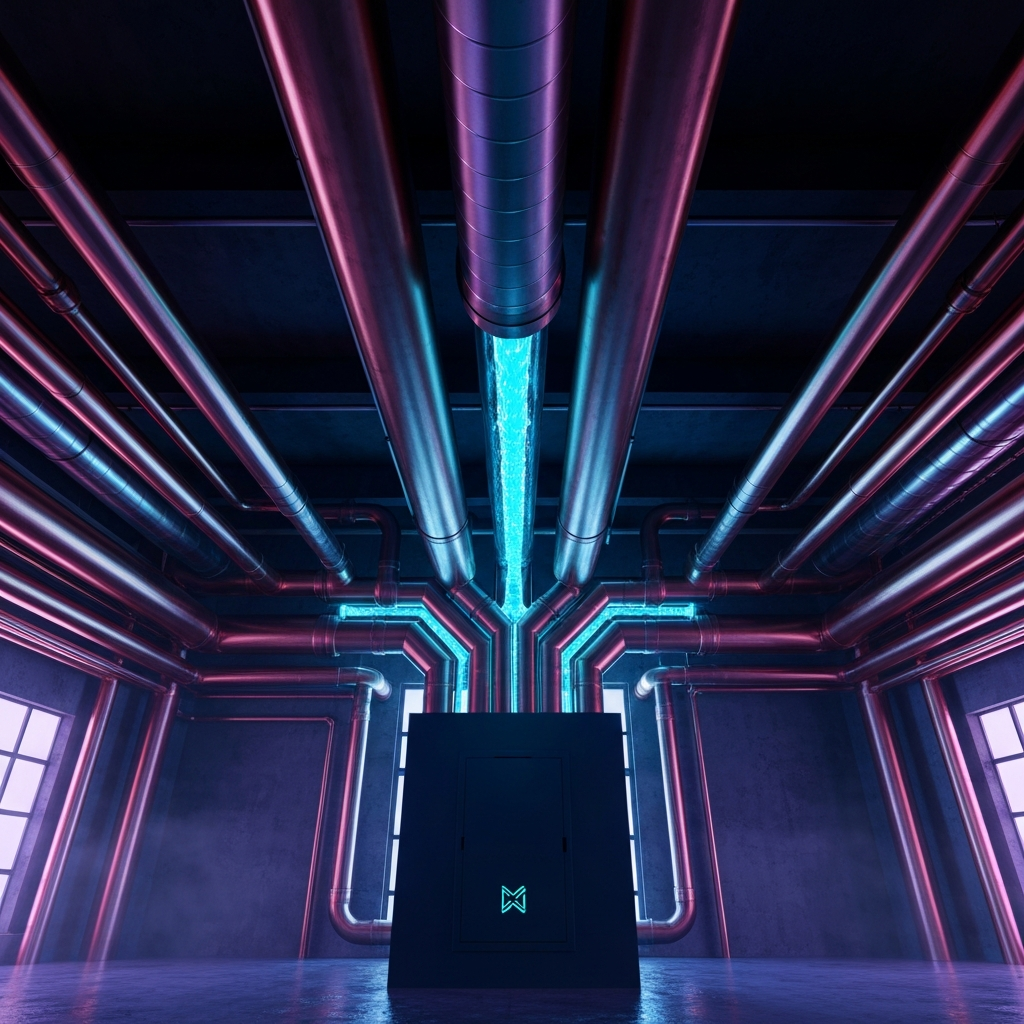
Think about it like a building. The model is the furnace. The API is the thermostat. But the SDK is the ductwork running through every wall. Nobody brags about ductwork. Nobody posts about it on LinkedIn. But if you rip it out, nothing works.
Stainless is ductwork. It takes an API specification and compiles it into production-grade client libraries across six or more languages. It also generates CLIs and MCP servers, the connectors that let AI agents interact with external tools and data. Anthropic created MCP (Model Context Protocol) as an open standard for agent connectivity. Stainless builds the tooling that makes MCP usable in practice.
The Plumbing Principle says: whoever owns the ductwork decides which furnace gets installed first. Not by blocking competitors. By making one path 15% easier than every other path. That 15% compounds across millions of developers and thousands of enterprise integrations. It becomes the default.
Stripe understood this. Its client libraries were so clean, so native-feeling in every language, that developers chose Stripe over competitors who offered lower fees. The SDK was the moat, not the payment rail. Anthropic is making the same bet, except the stakes are measured in billions, not basis points.
Why Anthropic Just Bought Its Competitors' Toolchain
Let me walk you through what Anthropic actually gets for $300 million, because the surface reading misses the real play.
Stainless is not a typical acqui-hire. It is a supply chain acquisition. According to Anthropic's own announcement and reporting from The Information, Stainless powers SDKs for Anthropic, OpenAI, Google, Meta's Llama Stack, Runway, Groq, Cerebras, LangChain, Braintrust, Writer, and Cloudflare. That is essentially every major AI API provider on one vendor's platform.
Now that vendor belongs to Anthropic.
Here is the 80/20 on what this means in practice. Forget the noise about antitrust or brand damage for a second. Focus on three concrete levers.
Lever 1: First-class feature shipping. Anthropic can now ensure that every new Claude API feature, every MCP update, every agent capability gets SDK support on day one, in every language, with native-feeling ergonomics. OpenAI and Google have to either keep using Stainless (now an Anthropic subsidiary) or rebuild their own SDK generation pipeline. OpenAI previously built its own SDK in-house, found it too expensive to maintain, and switched to Stainless. Rebuilding takes 6 to 18 months and a dedicated team of 5 to 15 engineers, according to industry estimates.
Lever 2: MCP becomes the default agent protocol. Stainless already generates MCP servers alongside SDKs. With Anthropic owning the tooling, MCP support gets baked into every SDK generation workflow. If you are a developer building an agent that needs to connect to Salesforce, Slack, or a custom internal API, the path of least resistance is now MCP plus Claude. Not because alternatives do not exist. Because the Stainless toolchain makes this path feel frictionless. Simple always defeats complex.
Lever 3: Ecosystem telemetry and pattern visibility. Whether Anthropic will have access to usage data from Stainless's other customers remains unclear. Contracts and privacy constraints likely limit this. But even without telemetry, owning the toolchain gives Anthropic structural insight into how developers interact with APIs across the industry. They see which languages matter, which patterns emerge, which integrations get built most often. That is product intelligence you cannot buy on the open market.
Now, the honest counterargument. SDKs are not CUDA. Tools like openapi-generator and Swagger Codegen exist. A well-funded lab can rebuild this capability. The real question is whether they will do it fast enough and well enough to match the developer experience that Stainless provides. My read on this: most will try, and most will ship something 70% as good, which in developer tooling means 70% adoption. That gap is the moat.
The nicher you go, the faster you grow. Stainless went extremely niche: API-spec-to-SDK compilation. That specificity made it indispensable. And now Anthropic owns it.
One more number to put this in context. Anthropic's annualized revenue run rate hit $30 billion as of April 2026, according to Entrepreneur Loop. The $300 million acquisition price is roughly 1% of one year's revenue. For a company growing at 3x year-over-year, spending 1% of revenue to control the developer access layer for the entire AI industry is back-of-napkin brilliant.
2031. Pull back five years and ask where this move sits in the arc of AI platform competition.
Three layers of the AI stack are crystallizing into distinct competitive battlegrounds. Layer one is models. Layer two is infrastructure (compute, training, inference). Layer three is the developer experience layer: SDKs, protocols, tooling, agent connectivity.
From 2022 to 2025, the war was fought almost entirely on layers one and two. Who had the best model. Who had the most GPUs. Who had the deepest cloud partnerships. Anthropic's Stainless acquisition marks the moment layer three became a first-class strategic priority.
The asymmetric advantage here compounds. Every developer who builds on Claude's SDK today creates switching costs for their employer tomorrow. Every MCP server deployed in an enterprise becomes a connector that is easier to maintain on Anthropic's stack than to migrate off it. Salary buys furniture, equity buys your future. Anthropic is buying equity in the developer ecosystem.
The historical parallel is not Stripe. It is Amazon Web Services in 2008. AWS did not win because it had the best virtual machines. It won because its SDKs, documentation, and developer tooling made it the path of least resistance for builders. By the time Google Cloud and Azure caught up on raw capability, AWS had millions of developers locked into its libraries, its CLI patterns, its deployment workflows. The ductwork was already installed.
Anthropic is running the same playbook, compressed into AI timescale. Bun for JavaScript runtimes (acquired December 2025). Vercept for computer-use agents (February 2026). Coefficient Bio for life sciences verticalization ($400 million in stock, April 2026). And now Stainless for the SDK and MCP layer. Four acquisitions totaling over $700 million in roughly six months. That is not a shopping spree. That is a platform assembly operation.
The contrarian risk is real, though. History shows that developer-facing layers often get standardized and commoditized. Kubernetes ate proprietary container orchestration. Terraform ate proprietary infrastructure-as-code. If a neutral, open SDK generation standard emerges, backed by a consortium of OpenAI, Google, and Meta, Anthropic's Plumbing Principle weakens. The data is mixed on whether AI tooling will follow the same commoditization pattern or whether the pace of change is too fast for standards bodies to keep up.
I think the pace argument wins for the next 3 to 5 years. Standards take time. Anthropic is moving now.
Three signals inside the same shift
Anthropic now owns the SDK factory for nearly every major AI API provider.
Stainless powered client libraries for OpenAI, Google, Meta, Cloudflare, Groq, Cerebras, and more. Competitors must now rebuild their own SDK generation pipelines or continue relying on an Anthropic subsidiary. Rebuilding is estimated to take 6 to 18 months and a dedicated team of 5 to 15 engineers.
MCP server generation is now baked into the SDK toolchain Anthropic controls.
Stainless already generates MCP servers alongside SDKs in six or more languages. With Anthropic owning the tooling, every developer building agent connectivity faces a path of least resistance that routes through MCP plus Claude. Simple always defeats complex.
Four acquisitions in six months signal a full-stack platform assembly operation.
Bun (Dec 2025), Vercept (Feb 2026), Coefficient Bio ($400M, Apr 2026), and now Stainless (May 2026). Anthropic is compressing the AWS playbook into AI timescale, layering developer runtime, agent tooling, vertical specialization, and SDK infrastructure into a single stack.
What to Build This Weekend
You do not need to acquire a $300 million company to apply The Plumbing Principle. You need to control the connective layer in your own stack. Here is how to start.
Step 1: Set up an MCP server for one internal tool. Pick something your team uses daily. A CRM, a project tracker, a database. Anthropic's MCP documentation walks you through exposing it as a tool that Claude (or any MCP-compatible agent) can call. This takes about 2 hours if the tool has a REST API.
Step 2: Generate a typed SDK for your own API. If you have any API, even a small internal one, use Stainless (still available as a product) or openapi-generator to create a typed client library in Python or TypeScript. Ship it to your team. Watch how much faster they integrate. You will feel the difference immediately.
Step 3: Let an agent make a scoped purchase. Allowance, a YC P2026 startup from today's digest, generates one-time payment credentials for AI agents. Connect it to an MCP server. Give your agent a $5 budget. Let it buy something. This is the simplest way to experience what "agents that act" actually feels like in practice.
Step 4: Measure the friction. Time how long each integration takes. Note where you get stuck. The places where you lose 20 minutes reading docs or debugging type errors are exactly the places where SDK quality determines adoption. That is the moat in miniature.
The Plumbing Principle works at every scale. Anthropic is applying it to the entire AI industry. You can apply it to your team's workflow this Saturday. Build one tiny thing. See what connects.
Apply the Plumbing Principle to your own stack in three steps.
- Stand up an MCP server for one internal tool. Pick something your team uses daily: a CRM, project tracker, or database. Follow Anthropic's MCP documentation to expose it as a callable tool for Claude or any MCP-compatible agent. Aim for a working prototype in under four hours.
- Audit your SDK dependencies for single-vendor risk. Run a dependency scan across your AI integrations. If your Python or TypeScript client libraries trace back to Stainless-generated code, document the dependency and evaluate whether you need a migration plan or can accept the new ownership structure.
- Map your own connective layer and own it. Identify the "ductwork" in your product: the integration points between your core service and your builders or users. Invest in making that layer 15% easier than any alternative. That compounding friction advantage is the moat the article describes.
The model war is a distraction. The real fight is for the developer ductwork.
Anthropic spent roughly 1% of its annual revenue to control the connective tissue between AI models and the millions of developers who build on them. The Plumbing Principle is simple: whoever makes the default path frictionless wins distribution. Competitors can rebuild their SDK pipelines, but the 6 to 18 month gap is an eternity at AI speed. Standards bodies may eventually commoditize this layer, but for the next 3 to 5 years, Anthropic has installed the ductwork and gets to decide which furnace heats the building.