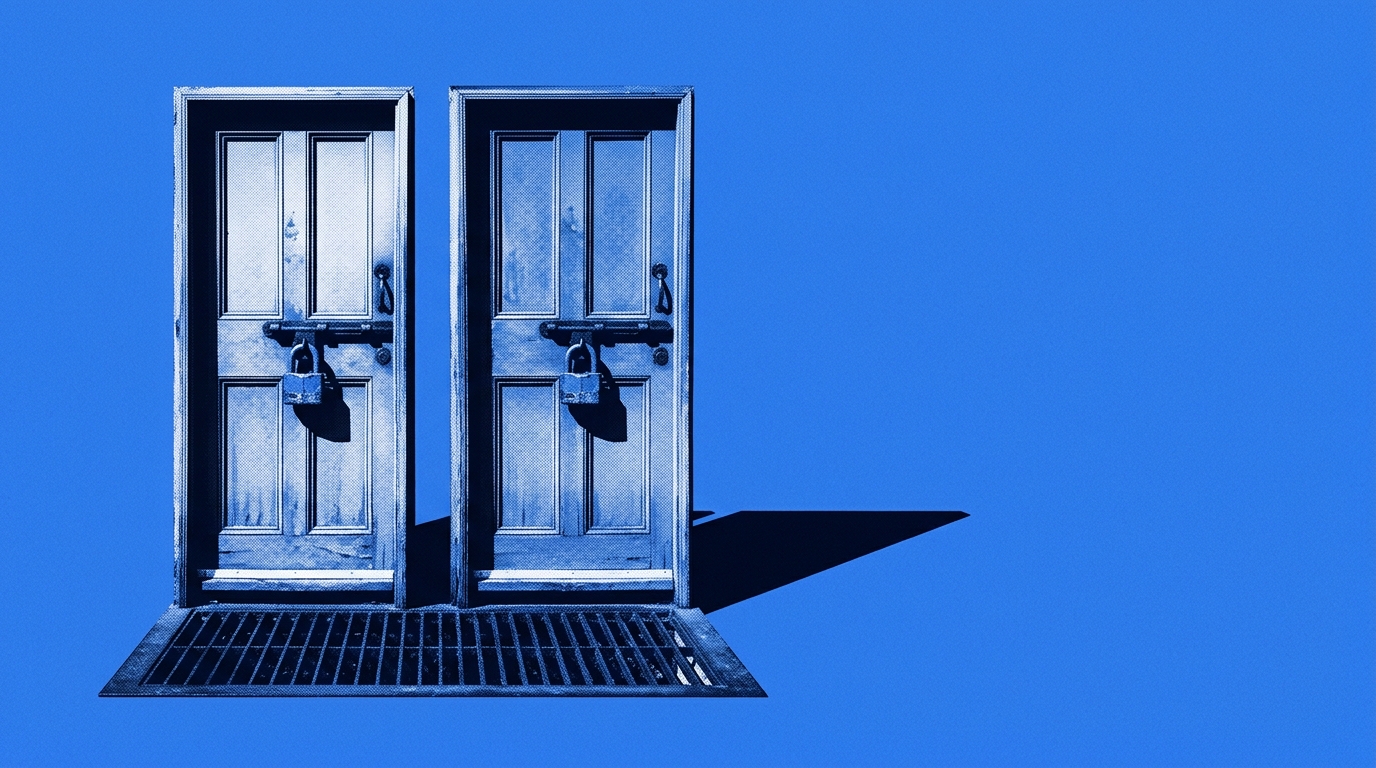
ChatGPT, Claude, and Grok all reportedly had separate service disruptions on September 3, 202601. Downdetector logged around 37,00022 ChatGPT reports by 11 a.m. ET, according to Computerworld, plus more than a thousand each for Claude and Grok. In the same 24 hours, OpenAI shipped GPT-6 Astra. Launch-day traffic met a three-way failure across the top of the market.
Here is the damaging admission up front. Nobody has confirmed a shared root cause. TechTimes pointed to an Azure East US ingress failure as the likely cause of the outage. WIRED reported that neither OpenAI nor Anthropic named an outside cause in comments to WIRED, and that Azure, Cloudflare, and AWS posted no broad outage that day.
The timing was not literally the same minute either. Per The Register, Anthropic's status page showed a partial outage from 6:2309 a.m. PT, xAI started investigating Grok around 6:3010 a.m. PT, and OpenAI's routing error began around 7:4311 a.m. PT. Call it the same breakfast, not the same second.
So I will not tell you the whole industry runs on one server. I will tell you something more useful. If your failover plan was "if OpenAI errors, call Anthropic," you had two doors on the same basement. And on September 3 the basement flooded.
The Shared Basement Test
Here is the framework I use. Three storefronts on one street look like three businesses. If they share a basement, one burst pipe closes all three. Your AI vendors are the storefronts. The infrastructure under them is the basement.
What one breakfast of correlated failure actually cost.
A fallback only counts as redundancy if it lives in a different basement on five floors. Cloud platform. Region. Edge and DNS. Identity and auth. Model host. Miss one floor and you have Cosmetic redundancy: two logos, one blast radius. Pass all five and you have Structural redundancy, a second path that stays open when the first one fails.
Most stacks I have looked at are Cosmetic. They pass the vendor test and fail the cloud test. Reporting from 9to5Google, cited by Mathrubhumi, said all three affected assistants rely on Azure in some form. Whether or not Azure caused this specific incident, that is a shared floor, and it has been there the whole time.
Look at the counterexample. TechTimes reported that Google's Gemini stayed up on Google Cloud while the other three struggled. If Gemini did hold, it held because it sat in a different basement. That is the whole trick.
Your fallback now costs $50 per million
Let's get practical, because this is where the money leaks. Think of a frontier model as a 500 IQ intern. Your failover config is the note you leave on the intern's desk that says "if you are sick, ask the other intern." On September 3 the other intern was also sick, because they carpool.
The naive pattern is a try-catch. Call provider A, catch the error, call provider B. That works when A has a bad day alone. It fails when A and B share a cloud region, a DNS provider, or an auth layer, because the error you caught is the same error B is about to throw.
Websites fall into three buckets, and so do failover setups. A Tractor is ugly and works: a plain router with health checks and a second cloud. A Ferrari is pretty and has no engine: a slick multi-vendor dashboard where every vendor sits on Azure. A Unicorn is both. I think most "multi-provider" configs sold in pitch decks are Ferraris.
Now layer in the price change. GPT-6 Astra lists at $1017 per million input tokens and $5018 per million output tokens, roughly 2.5x19 its predecessor. Output costs 5x input on that sheet. If your router promotes Astra as the "always up" backstop, a million output tokens during an outage costs you $50, not the price you budgeted.
That is the part builders miss. A fallback model is not a drop-in substitute. Its cost per token is different. So is its latency curve. So are the ways it breaks. Route to it blindly and your outage turns into a bill.
So the 80/20 of failover comes down to three things. First, detect real failure: HTTP 500s, 529s, and a latency threshold you set on purpose. Second, degrade inside a vendor before you leave it, because Anthropic's smaller models recovered while its Opus 4.802 and Opus 5 stayed degraded, per onthewire.ai. Third, keep one path on a genuinely different cloud, even if that path is a smaller model.
Don't make me think. The user hitting your product during an outage does not care which model answered. They care that something answered in under a few seconds and did not hallucinate their invoice. Sell Maui, not the flights to Maui. Uptime is the outcome. The router is a flight.
Simple beats complex here, every time. A one-page dependency map beats a fifty-node orchestration diagram that nobody has tested by pulling the plug. Cursor and other coding tools that ride on these APIs also reported downtime, according to MacDailyNews. Your fallback for your fallback may be the same basement again.
2031. Pull back five years. Forget who wins the model race. Watch how few clouds host the winners. Reporting after September 3 speculated that three of the four biggest chatbots likely sat on the same cloud backbone. If that stays true, every "vendor diversity" slide is accounting, and only independent infrastructure is real.
Here is the asymmetric bet. A second cloud path costs you some engineering hours and a modest monthly bill. A correlated outage on your launch day costs you customers who never come back. Small known cost against large unknown loss is the easiest trade in the book. Take it before you need it.
Counterpositioning shows up here too. Google's cloud advantage barely registers when everything is up. The one morning it matters, it becomes a sales deck. We still do not know whether Azure East US was the real root cause on September 3, but the perception already rewards whoever sits in a different basement.
Aviation learned this the hard way. Two engines on the same fuel line is one engine. Finance learned it too, which is why clearing systems run across regions and networks, not just across vendors. The AI stack in 2031 will learn the same lesson one of two ways: through design, or through a much bigger September 3.
Beginner's mind helps. Do not assume your provider list equals your failure domain list. Assume nothing is independent until you have traced the wire to the ground. Impermanence applies to uptime too. Every status page eventually turns orange.
Three storefronts, one flooded basement
Vendor diversity is not failure-domain diversity.
Reporting after September 3 speculated that three of the four biggest chatbots likely sat on the same cloud backbone, and 9to5Google, cited by Mathrubhumi, said all three affected assistants rely on Azure in some form. Whether or not Azure East US caused this incident, that shared floor has been there the whole time. Cursor and other coding tools riding the same APIs also reported downtime.
Nobody has confirmed why all three broke together.
WIRED reported that neither OpenAI nor Anthropic named an outside cause, and that Azure, Cloudflare, and AWS posted no broad outage that day. The Register put Anthropic at 6:2309 a.m. PT, xAI at 6:3010 a.m. PT, and OpenAI's routing error near 7:43 a.m. PT. Same breakfast, not the same second, and still unexplained.
Your backstop model reprices your outage.
GPT-6 Astra lists at $1017 per million input tokens and $50 per million output, roughly 2.5x19 its predecessor, with output costing 5x input. Promote it as the always-up backstop and a million output tokens during an outage costs $50, not the number you budgeted. A fallback model is never a drop-in substitute on cost, latency, or failure mode.
Route one request around Azure tonight
You do not need a platform team for this. You need one evening and a text editor. Here is the order.
First, draw your basement. List every AI call in your product, then write the cloud, region, and auth provider next to each one. If you do not know, that is the answer, and it means you have Cosmetic redundancy. Use Codex CLI 0.15203.0 for this, but turn the planning tool back on, since it ships disabled by default and this is multi-file work.
Second, add one path that fails the carpool test. If your primaries sit on Azure, put a Gemini call on Google Cloud, or a small self-hosted model on a box you control. It does not need to match GPT-6 Astra on quality. It needs to answer.
Third, write the trigger rules in plain English before you write code. "On HTTP 500 or 529, or after 8 seconds, degrade to a smaller model from the same vendor. If that also fails, cross clouds." A rule you cannot say out loud is a rule you cannot debug at 7:4311 a.m.
Fourth, price the switch. At $5018 per million output tokens, decide how many tokens the backup path may burn before it pages a human. Put that cap in the router, not in a wiki.
Fifth, break it on purpose. Block your primary endpoint at the network level and watch what happens. If you run OpenClaw 2.004, consider reinstalling from scratch and reviewing which providers and permissions it touches, because a wide update is the moment hidden dependencies sneak in. If you want the audit done hands-off, Marky Agent on Easy-Peasy.AI will take a whole task, so hand it the status pages and the dependency list rather than a prompt.
Things will break during the test. That is the point. A failover that has never fired is a Ferrari with no engine. Get your reps in now, learn in public, and the next launch-day outage becomes a log line instead of a headline.
Trace every AI call to the ground, then cut one wire on purpose.
- Draw your basement in one page. List every AI call in your product and write the cloud, region, edge and DNS, auth provider, and model host beside each one. Use Codex CLI 0.15203.0 for the sweep, but turn the planning tool back on, since it ships disabled by default and this is multi-file work.
- Add one path that fails the carpool test. If your primaries sit on Azure, put a Gemini call on Google Cloud or a small self-hosted model on a box you control. It does not need to match GPT-6 Astra on quality, it needs to answer.
- Write the trigger rules, then break the primary. Say it in plain English first: on HTTP 500 or 529, or after 8 seconds, degrade to a smaller model from the same vendor, then cross clouds. Cap the backup path in the router at a set token budget priced against $5018 per million output, block your primary endpoint at the network level, and watch what actually happens.
Uptime is the outcome. The router is just a flight.
Nobody has proven a single root cause for September 3, and that is exactly why the shared-basement test matters more than the postmortem. Most stacks pass the vendor test and fail the cloud test, which means two logos and one blast radius. A second cloud path costs engineering hours and a modest monthly bill, while a correlated outage on launch day costs customers who never come back. Draw the dependency map, price the fallback at $5018 per million output tokens before you route to it, and pull the plug yourself while the stakes are low. Every status page eventually turns orange.