Close your laptop at 11 p.m. and, as of this week, something you pay OpenAI for keeps working. That is the headline from DevDay 2026, where OpenAI shipped more than 20 launches in one keynote at Fort Mason in San Francisco on September 29. The one that matters most is called dots: always-on agents, powered by GPT-6 Astra, that each get their own computer in the cloud, connect to more than 4,000 apps through plugins, and work toward your goals around the clock.
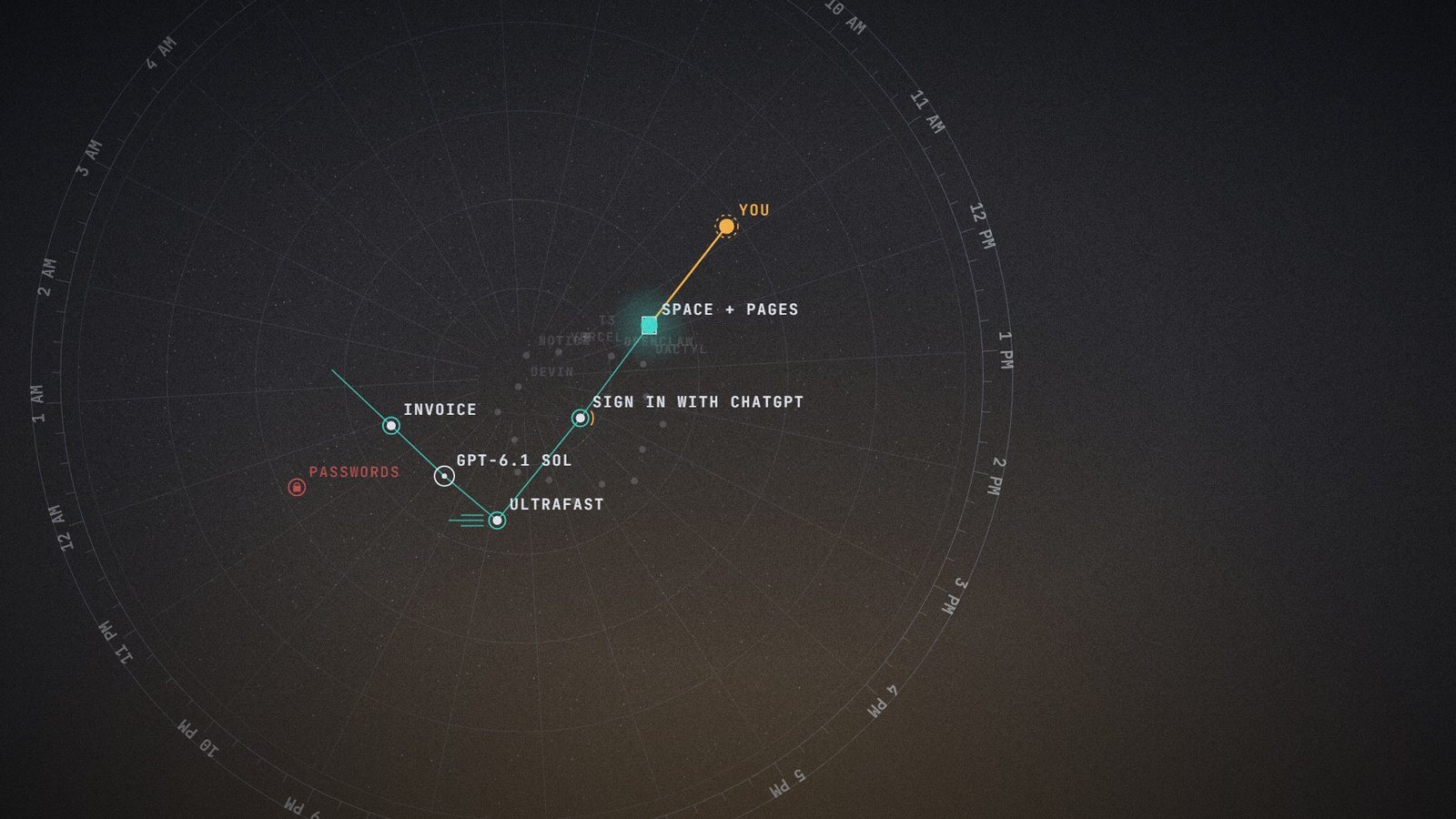
We turned the five launches that matter into a two-minute film told as one night on a star chart. You can watch it on this page, and there is a vertical cut on YouTube Shorts. OpenAI names its models after the sky: Astra is a star, Sol is the sun, Luna is the moon. So the film follows your dot across a planisphere from 11 p.m. to 7 a.m., one launch per hour.
This piece is about the part of the launch most coverage skips.
The Night Shift Test
Every always-on agent will get judged on how much it can do while you sleep. That is the wrong question. The useful test has three lines, and OpenAI's own dots launch post answers all three.
What the night shift costs
What can it do alone? Background work, which OpenAI calls proactive research, runs on tools restricted to read-only. Those tools cannot send messages, change app content or control your browser or computer.
What does it have to ask? Custom Rules let you allow an action, require approval for it, or block it. The best example in the launch post is a small one. An early tester forgot to invoice a publication. His dot noticed, prepared the invoice, and sent it after his approval.
What can it never touch? In OpenAI's words: "Certain sensitive tasks, such as changing a password, always stay with you." The same post says dots can still make mistakes, so review consequential work.
If you run a finance team, those three lines are the rollout plan. The agent did the tedious part, and a person still pressed send.
The price moved in both directions
The second launch changes the budget math. GPT-6.1 Sol costs $2 per million input tokens and $10 per million output tokens, against GPT-6 Astra at $10 and $50. That is one fifth on both lines, and OpenAI says Sol matches Astra on its DeepSWE coding benchmark at roughly a fifth of the cost. Cached input, the context an agent reuses on every step, drops to $0.10 per million. Sol is in ChatGPT Work, Codex and the API, but not yet in regular chat.
The third launch goes the other way. Ultrafast generates tokens up to 8 times faster in Codex, about 300 tokens a second, and up to 6 times faster in the API. On stage, Sam Altman put its price at 6 times the standard rate and said it was worth it. It ships with a new plan, Pro 500, at $500 a month with 25 times the ChatGPT Plus allowance.
Put those two side by side and you get a real decision. Cheap intelligence for the long night of background work, and expensive speed for the moments a person is waiting. Our rule: pay for speed only when waiting costs more than the tokens.
What the night shift changes by morning
Work that keeps moving
Each dot gets its own cloud computer and more than 4,000 apps. Its background research runs on read-only tools.
Cheap brains, paid speed
Sol costs a fifth of Astra per token. Ultrafast charges 6 times the standard rate for up to 8 times the speed in Codex.
The yes becomes the job
Allow, require approval, or block. Write all three lists before you switch an agent on.
Your login becomes a key
The fourth launch is quieter and may matter more to people who never touch an API. Sign in with ChatGPT lets you spend your plan's allowance in 16 partner apps, including Cognition's Devin, Notion, Vercel, T3, OpenClaw and Dactyl, and you control how much each one can use. Plan usage covers Plus and Pro. For a household, that is one subscription doing the work of several, with a limit per app.
Where the night's work lands
The fifth is ChatGPT Space, a shared workspace where teammates, ChatGPT and your dot build on the same knowledge, plus Pages, a document type made for people and agents to write in together. It is on Pro, Business and Enterprise. This is where the night shift hands over in the morning: one page instead of a pile of chats.
What we left out
DevDay had more. Codex now runs in the cloud from any device, the Codex CLI takes voice commands, plugin extensions put whole apps inside ChatGPT, a Decisions API is in preview, the Agents API gained computer use, and Codex Security Cloud scans repositories on a schedule. ChatGPT now has 1.2 billion weekly users, which is the audience all of this lands on. The keynote also had live demos that stalled, and OpenAI held back GPT-6.1 Astra over safety the day before. Dots roll out to Pro and Business Premium first, in eligible markets. Everything here comes from OpenAI's DevDay recap and launch posts, and the Ultrafast price comes from the keynote itself.
The zoom out
For three years the question about AI at work was whether the output was good enough. DevDay moves it. The agent now keeps working after you log off, so the scarce thing is no longer the work. It is the yes: knowing which actions you approve, which you block, and which you keep for yourself. Write those three lists before you switch one on. The last dot is yours.
Run the Night Shift Test
- List what it can do alone. Start with read-only work: research, summaries, and drafts nobody sees until you do.
- List what it must ask. Anything that sends, pays or publishes goes behind an approval, like the invoice in OpenAI's launch post.
- List what it never touches. Passwords are already on OpenAI's list. Add yours: payroll, bank details, anything you would not hand a new hire on day one.
The work is cheap now. The yes is the job.
DevDay made the agent always on and the tokens cheaper. It did not automate the decision about what the agent may do. Write your three lists this week, then switch one on.