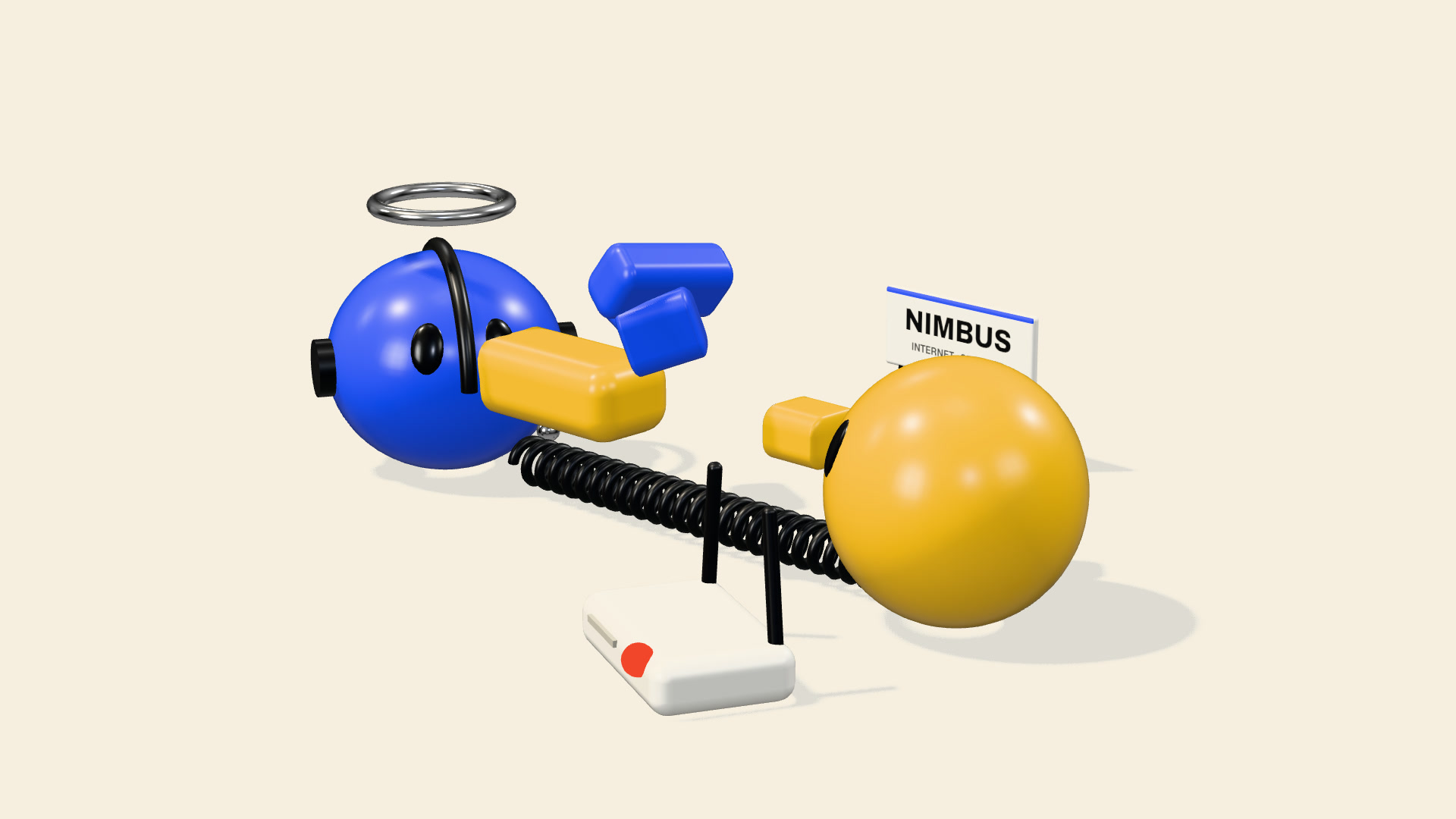
xAI released Grok Voice 3.0 on October 14, a speech-to-speech model for phone agents, at $0.08 a minute. That is the same price as Grok Voice 2.0. Eight cents a minute is cheap enough that the price stops being the question. The question is what happens on a real call. We made a one-minute film that runs a support call through three tests. You can watch it on this page, or as a YouTube Short.
The call it has to survive
A support call is rarely a clean script. People cut in. They change their minds. They talk over hold music with a dog barking in the background. So we wrote a call for a made-up internet company with a made-up outage, and acted it out. The agent starts reading the standard fix, the caller cuts in to say they already did it, and halfway through booking a technician the caller switches from Tuesday to Thursday.
What each number does and does not say
That call is a re-enactment. It is not Grok Voice, and nothing in the film is xAI's footage. We did not have API access for this piece, so every result below comes from the published benchmarks and from xAI's own figures, and we say which is which.
Test one: cut it off
Interruptions are where older voice bots fall apart. They keep talking, or they stop and lose their place. xAI reports a 97% score on Full Duplex Bench, an Artificial Analysis test of how naturally a model handles pauses, turn-taking and interruptions. Grok Voice 2.0 scored 95.1% on the same test, so the gain is small. The score was already high.
Three numbers to act on
Model cost of a ten-minute call
Cheap enough that the minute is no longer the question. Budget the whole call, not the model line.
Full support calls finished on Tau-Voice
Up from 56.5% for Grok Voice 2.0, and just under GPT-Live-1 at 74.5%.
Starlink calls with no human, by xAI's count
The rest still reach a person. Price the hand-off first: who picks up, how fast, and what a failed call costs.
Test two: change your mind
This one has a clear pass mark. If the caller asks for Tuesday and then says "no, Thursday", the right result is one booking on Thursday and nothing on Tuesday. Two bookings is a fail even if the agent sounds friendly. No single benchmark scores exactly this, which is why it is worth testing on your own calls before you go live.
Test three: the whole call
τ-Voice is the closest benchmark to a real support line. It runs complete support calls with different accents, background noise and interruptions, and checks whether the agent actually finishes the task. Grok Voice 3.0 scored 71.6%. Grok Voice 2.0 scored 56.5%, so that is a real jump. GPT-Live-1 scored 74.5% on the same chart, while Grok answered about 40% faster, by xAI's own numbers.
Read 71.6% plainly. On the benchmark's calls, about seven in ten ended with the job done. About three in ten did not.
What xAI says about Starlink
xAI says Starlink's call centres use Grok Voice for 20,000 customer calls a day, and that roughly 70% are resolved with no human in the loop. That fits the benchmark. It is also the company's own figure about its own sister business, and no one outside has audited it.
The real cost of a call
At $0.08 a minute, a ten-minute call costs $0.80 in model time, and an hour costs $4.80. That is the model's line on xAI's price list, and it is only one line of the bill. The phone number and carrier minutes, the software that connects the agent to your systems, and the people who take the calls the agent cannot finish all cost extra.
Why a finance team should care
I run AI on real finance work every day, and I read a launch like this the way I read any cost line.
The headline rate is the easy part. The business case lives in the three calls out of ten that need a person. Price the escalation path first: how fast the hand-off is, who picks up, and what a failed call costs you in refunds or churn. Then compare that with what the minute saves.
And run your own version of the three tests on your own calls. Interrupt it. Change your mind. Count the bookings.
Would I trust it with a support call?
Seven times in ten, yes. The other three need a human who picks up.
Sources. xAI, Introducing Grok Voice 3.0, October 14, 2026. xAI, API pricing, checked on October 14, 2026. Artificial Analysis, speech to speech leaderboard, results dated October 13, 2026 as cited by xAI.
The support call in the film is a re-enactment with a made-up company. It is not Grok Voice and not xAI footage.
Three tests to run this week
- Interrupt it. Cut in halfway through its script and check that it drops the script and answers you.
- Change your mind. Ask for Tuesday, then say Thursday. Count the bookings. One is a pass.
- Ask for a human. Time the hand-off, and check what the person sees when they pick up.
Eight cents buys the minute. Plan for the other three calls.
Grok Voice 3.0 handles interruptions well and finishes about seven support calls in ten on the best public test. The business case lives in the three it does not.