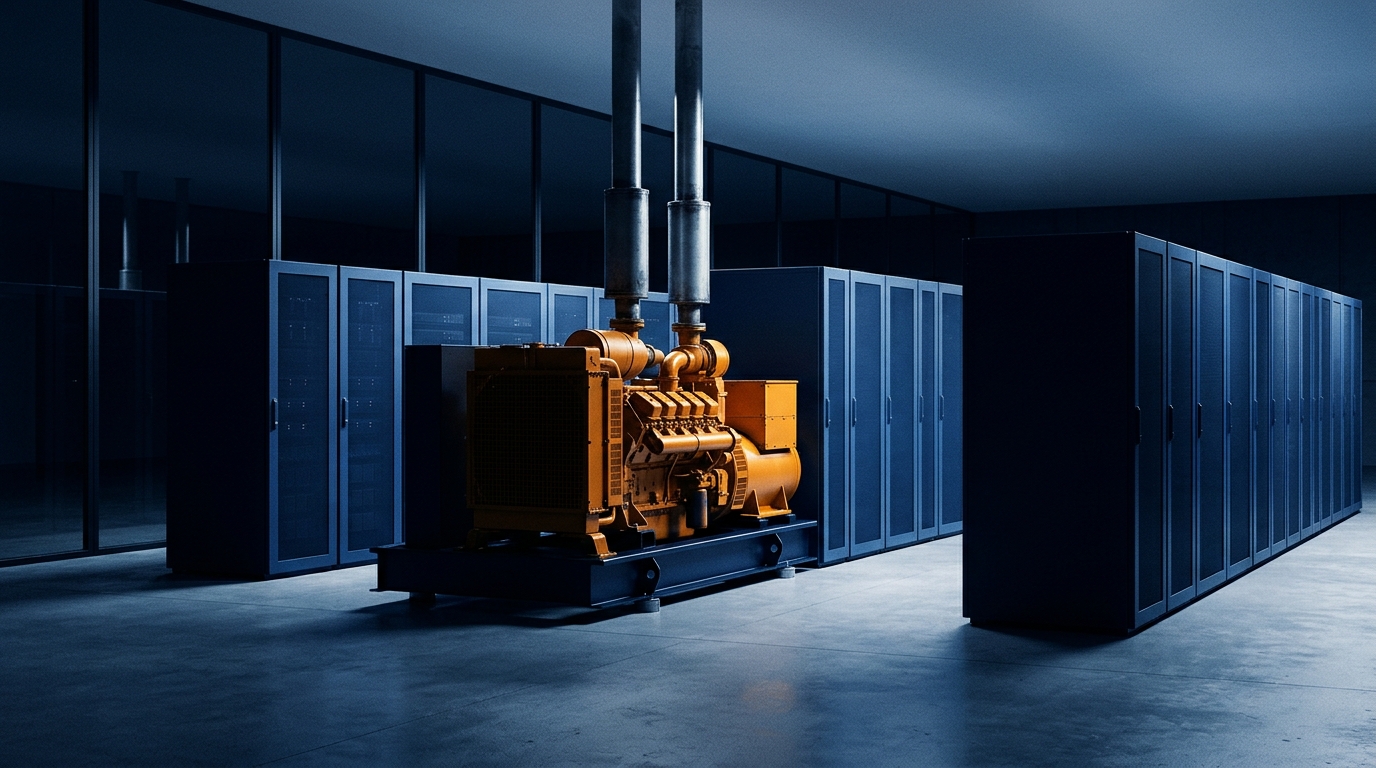
Anthropic reportedly agreed to take on about $3.4 billion1 in commitments for gas generators. The Financial Times reported the story, and Reuters said it could not immediately verify the account. The deal reportedly covers 1.7 gigawatts of heavy-duty Caterpillar equipment. That works out to about $2.0 million per megawatt, spent before one extra token gets served.
The timing matters. The story surfaced on November 8, the same week Anthropic began its IPO roadshow, the tour where a company pitches its Class A shares to large investors. Anthropic had just shipped Claude Fable 5.2 and Claude Mythos 5.2, which it says run up to 30%2 faster.
We should be clear about what we do not know. Nobody outside Anthropic knows how many of those generators will run, or how often. Anthropic and OnePWR did not respond to requests for comment, according to Gadget Review's summary of the FT report. If you sell a product built on Claude or any frontier API, though, your cost sheet now has a new line in it: your provider's gas bill.
Anthropic Paid for a Delivery Date
What Anthropic paid for is a delivery date. It reportedly took over generator orders that OnePWR Solutions, a San Antonio equipment supplier, had already placed with Caterpillar. The commitments reportedly include the engineering and construction capabilities needed for installation. OnePWR itself reportedly stays with its owners.
| Gas generator commitmentsFortune · 1.7 GW of Caterpillar equipment | $3.4B1 |
|---|---|
| Total compute commitmentsAmended IPO filing · contracts run to 2045 | $900.9B1 |
| Due in the next twelve monthsAmended IPO filing · after Sept 30, 2026 | $70.7B1 |
| Due before 2030Amended IPO filing · includes year one | $451.6B1 |
Reports put the equipment online within roughly the next two years. HyperAI reports that lead times for new gas turbines now stretch into the early 2030s. A lab in the normal queue would get this power around 2032. Anthropic's slots arrive around late 2028.
So sort the deal by what Anthropic bought and what it cost. It bought about four years of time. It paid $3.4 billion1, and the $2.0 million per megawatt covers installation and the price of jumping the line.
The risk is the part a software company has never carried. Fuel prices, air permits, maintenance crews and idle capacity all land on Anthropic's books. Nameplate capacity, the maximum output printed on the equipment, also overstates usable power. Running flat out all year, 1.7 GW would make about 14.9 terawatt-hours (1.7 GW × 8,760 hours). Real output will come in below that once maintenance and outages take their share. TechCrunch's headline called this AI's "natural gas frenzy" and warned the deal "could give it buyer's remorse."
Reading the Bill as Cash
Start with the cash a company is obligated to pay. The story it tells can wait. Anthropic's amended IPO filing, as reported, lists about $900.9 billion1 in computing and infrastructure commitments. Roughly $451.6 billion falls before 2030. Anthropic's amended filing says about $70.7 billion comes due in the twelve months after September 30, 2026, and some contracts run to 2045.
Could give it buyer's remorse.
Now hold the generator deal up against those numbers. $3.4 billion1 is about 0.38% of the $900.9 billion total. Spread $70.7 billion across 365 days and Anthropic owes about $194 million a day. The whole gas deal comes to roughly 17 days of next year's bill.
In other words, the generators are small money carrying a large message. The ramp matters more. Take the $451.6 billion due before 2030, subtract the $70.7 billion1 due first, and about $381 billion remains. If "before 2030" means through December 2029, that averages about $169 billion a year, roughly 2.4 times the first year.
Bloomberg also reported on November 6 that valuation expectations were under pressure after an AI stock rout. A company facing a 2.4x step-up in obligations can cut cost per token or raise prices. Builders on the API sit directly under the last one.
That ramp is why the decision belongs to now. We think builders should plan for API prices that fall more slowly than the industry's habit of steady price cuts suggests. Two developments would change that call. One is a filing that shows high utilization and rising gross margin. The other is a price war from Google, Microsoft, Amazon and Meta as their own capacity comes online.
The bull case deserves a fair hearing. Dedicated power could make Claude more reliable, and a provider with secured electricity may gain scale and lower its unit costs. Whether the 30%2 speed gain in Fable 5.2 and Mythos 5.2 means fewer watts per answer is unclear, because Anthropic's claim is about speed. If competitors absorb energy costs to win share, prices stay low and the danger shifts to provider financial stress and consolidation. Either way, it reaches your app.
Token Prices May Stall Through 2028
Put the dated facts on one line. In September 2026, Anthropic signed the generator deal. In November 2026, the roadshow began. Around late 2028, the equipment comes online, if the two-year estimate holds. Around 2032, the same turbines would have arrived through a normal queue, by Tom's Hardware's six-year count. In 2045, the last commitments in the filing expire.
The squeeze comes in the next two years. Anthropic pays for generators that make no power yet, while its yearly commitments roughly double. Prices may stall in that window for premium, high-reasoning workloads, even as cheap tiers keep getting cheaper. Expect tiering. Enterprise contracts get reserved capacity, and smaller accounts hit rate limits during demand spikes.
Over time, this compounds in the labs' favor. A lab that locks in power early can train and serve on schedule, which wins customers, which funds the next power deal. The evidence suggests a small API customer loses bargaining power as power gets scarce, because fewer sellers can finance the whole stack. By 2030 that might mean fewer real choices, even if the number of model names keeps growing.
For a builder, the risk is lopsided. Preparing for flat prices costs an afternoon with a spreadsheet and one fallback model. Assuming steady declines and being wrong costs your gross margin for two years. The data is mixed on direction. The grid could expand faster than expected and strand some gas assets, which would ease the pressure. Still, a cheap hedge beats an expensive surprise.
Stress-Test Your Margin Against Provider Power
It takes one afternoon and you rerun it every month.
Step one: export the last 30 days of token usage from your provider's usage page, broken out by feature. Split input tokens from output tokens, since they are usually priced differently. If you cannot tie usage to features, add a feature tag to every API call first. That tag is the most useful line of code in this whole exercise.
Step two: build a sheet with one row per feature. Add columns for monthly tokens, current list price, monthly cost and the revenue that feature earns.
Step three: test throttling. A rate limit is the ceiling a provider puts on requests per minute. In staging, cap your traffic at half your current peak and see what breaks. Expect queues to back up and timeouts to fire, and write down which user-facing screens fail first.
Step four: wire one fallback. Pick your simplest feature, such as tagging or summarizing, and route it to a second provider or an open-weight model. An open-weight model is one whose weights you can download and host yourself. Send a small slice of real traffic through it each week. It will fail in ways you did not predict, so log every failure and fix the worst one.
Step five: read your contract. Look for four things:
- price-escalation clauses
- reserved-capacity options
- notice periods for model deprecation
- termination rights
If you have an account manager, ask what happens to your rate limits during a launch week.
Rerun the sheet monthly and again whenever Anthropic files a new disclosure. Each filing updates the $70.7 billion1 and $451.6 billion figures your scenarios rest on.
Practise it step by step: Use AI With Numbers, Carefully
The bottom line
Budget for stalled prices and let filings prove you wrong.
Anthropic's gas deal is small next to its $900.9 billion1 in commitments, but it shows where frontier AI costs now live. The next two years bring rising obligations before new power arrives. A spreadsheet, a throttle test and one fallback model cost an afternoon. Rerun them monthly and watch each new filing for the margin data that would justify cheaper tokens.