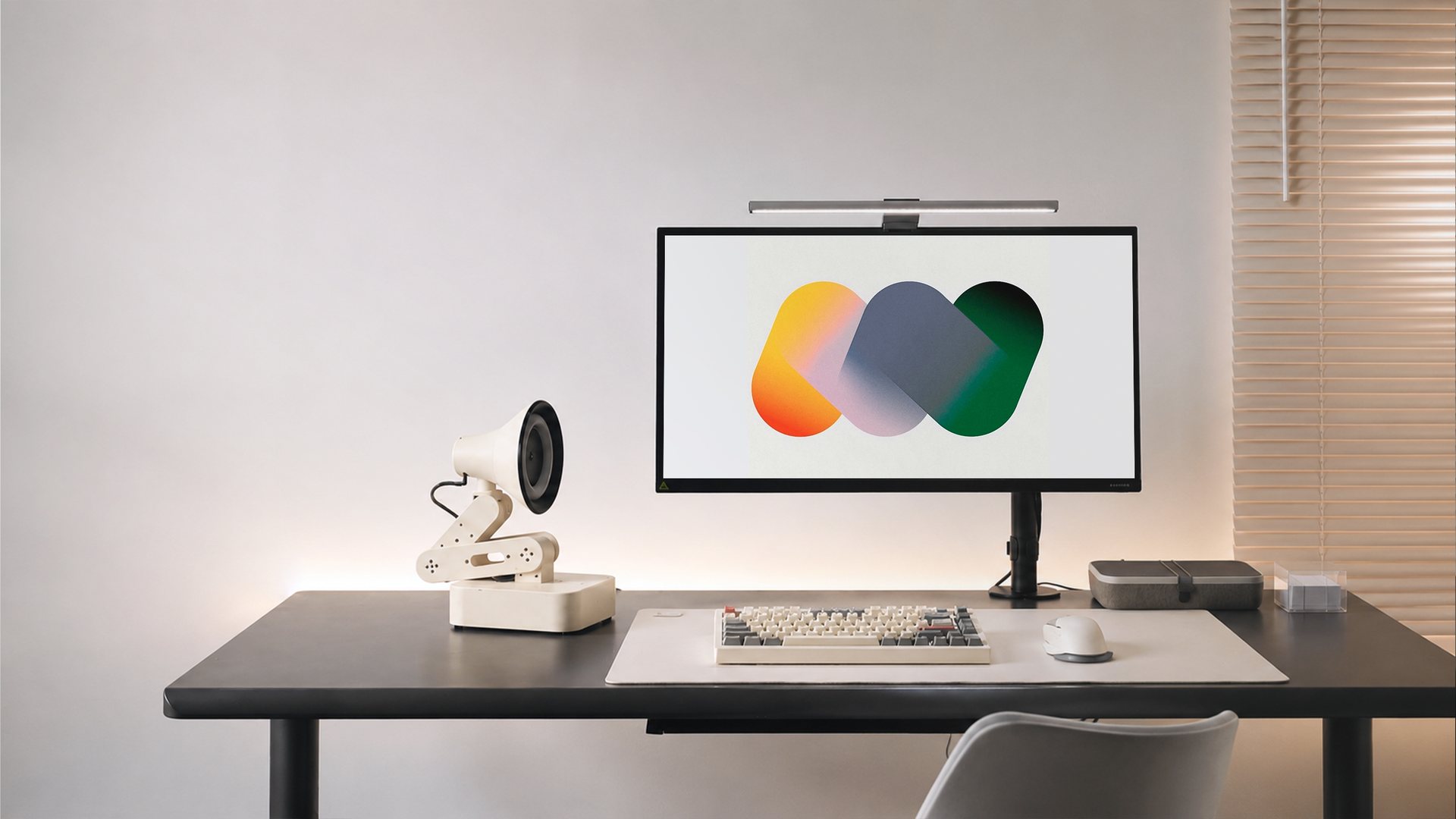
Most robot news asks you to trust a score. On 15 November The Signal told readers to wait for an independent result before believing the big robot benchmarks. Lamp takes the other route. It is a $699 desk robot that puts its code1, its hardware files and its builders' own daily report card on GitHub.
Lamp comes from Autonomous, the company better known for standing desks. It has five motors, and its head carries a camera inside a ring of 32 lights2. Autonomous says it turns to greet you when you sit down and wiggles when you pat its head.
One thing up front: we have not had a Lamp in our hands. Everything below comes from reading what Autonomous has published. There is a lot of it, and that is the story.
Everything is on the table
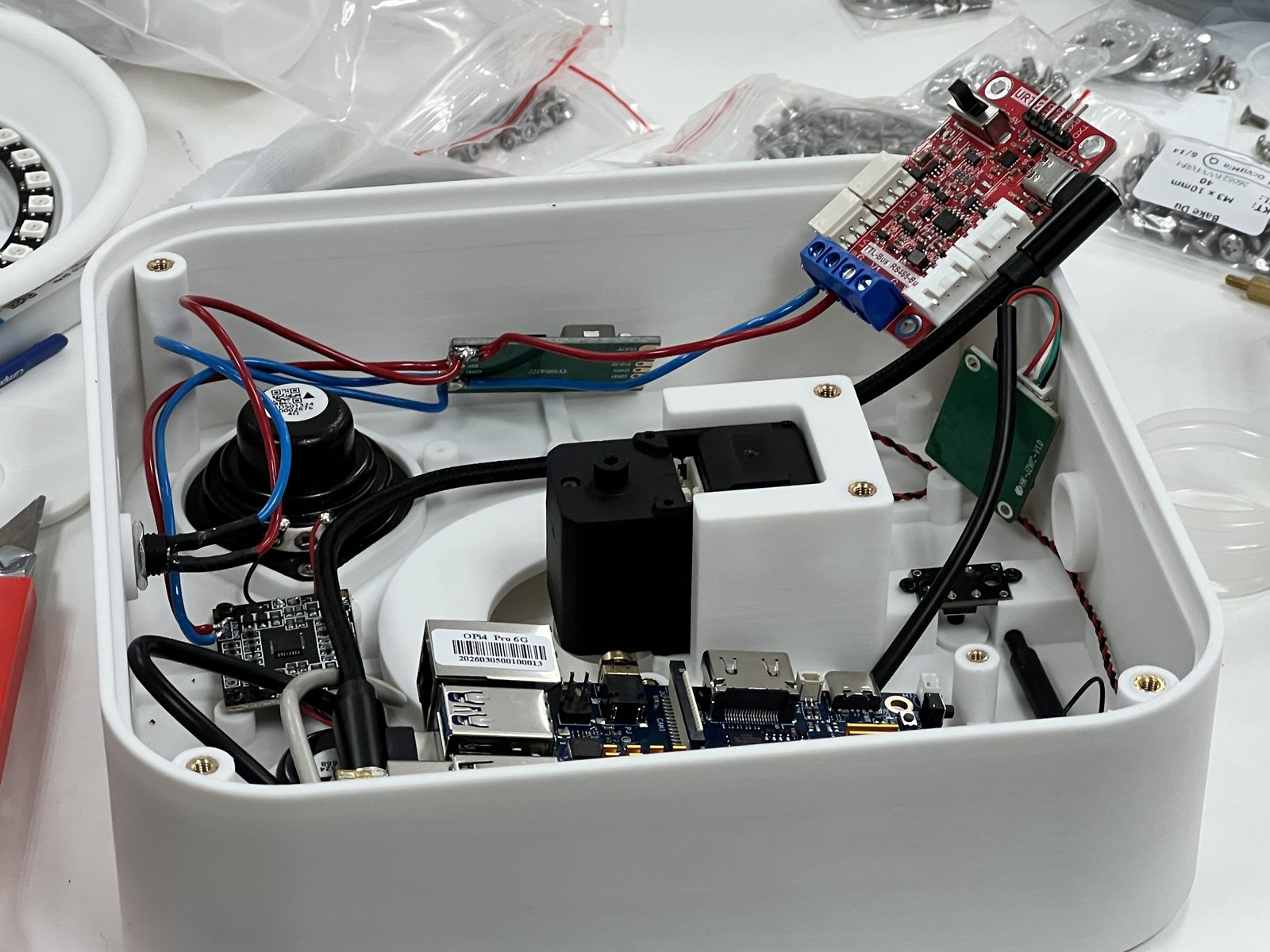
The software is public, most of it under the Apache-2.0 licence. The hardware is in the same repository. There are CAD files for the body and designs for the circuit boards, plus wiring diagrams and the parts list. On 20 November GitHub showed 15,999 commits and 935 releases2, a snapshot of a project that moves daily.
| Price1Assembled, shipping estimate 19 December | $699 |
|---|---|
| Processor8-core, with 6 GB of memory, per Autonomous's spec sheet | 8-core |
| Commits on GitHub2Default branch of the lampOS repository, 20 November | 15,999 |
| Self-scored qualityThe builders' own self-assessment, 20 November | 71.5%2 |
Think of a car that comes with the workshop manual and the factory drawings in the glovebox. You may never rebuild the engine. You still know exactly what you bought, and so does every mechanic in town.
The parts list reads like a hobbyist's shopping basket. Autonomous's spec sheet lists an 8-core processor and 6 GB1 of memory. The unit documented in the repository runs on an Orange Pi 4 Pro, a board the size of a credit card. Five off-the-shelf servo motors move the arm.
Built by agents, graded in public
The most surprising line in the repository sits in the guide for contributors.
There are no human coders here, only agents.
It claims: "There are no human coders here, only agents." That is the project's own account of how it works, and nobody has audited every contribution. The project manager is described as an agent too. The docs describe a lead who sets the direction and a team of named agents who write the code.
Those agents grade their own work every morning, in a file anyone can read. On 20 November their self-assessment said 92.0% built and 71.5% on quality2. It is self-reported, so read it as the team's own grade on itself. Most hardware companies would never print the second number.
The rows show what the builders count as done. Hearing "stop" over its own voice scores 1.00.2 So does the privacy switch, and so does handing a job to Claude Code or Codex. The weak rows are printed just as plainly: a backup voice sits at 0.50.
We think this is the best reason to watch Lamp. Anyone running AI agents at work wants to see what a whole product built that way looks like. Here is one, with its books open.
What it does on a desk
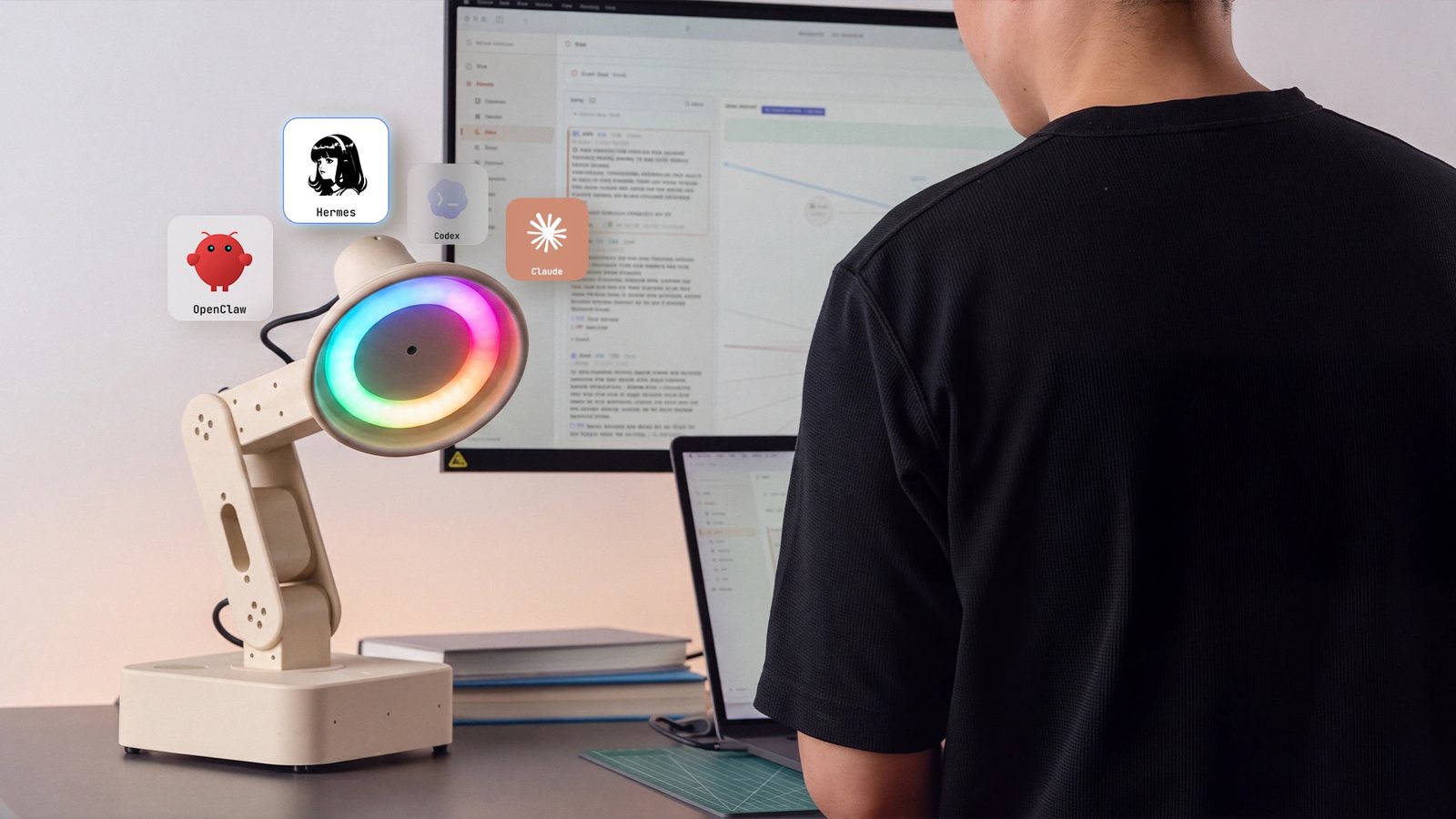
Lamp runs skills, small behaviours. The product page lists which ones are included and which come from the Skill Store. From the store, Task news tells you when Claude Code or Codex has finished a job. Desk tutor lights your page and checks your work when you are stuck. Included, Guard mode watches the desk while you are out and texts you if someone comes by.
You can add your own. The repository describes drafting a skill from a plain description, and the product page is candid that custom behaviours may need code and testing.
A Pro model adds air sensors. Autonomous says it measures the air, including CO2 and fine particles, and tells you when the room gets stuffy.
Privacy got real design time
A camera and a microphone on a desk deserve hard questions. The repository answers more of them than most product pages do.
The repository's docs describe faces being matched on the lamp itself, and say the device keeps no picture and sends no face print anywhere. They describe a slide switch that turns off both microphones and the camera, and software that treats a switch it cannot read as private.
The SDK guide applies the same idea to programs. It describes camera access only with the owner's permission and only on the local network, with a red dot on the light ring while a program looks. We read these design documents as intent. Nobody has tested them on shipped units.
One honest limit: out of the box, conversation runs on Autonomous's hosted AI, so Lamp needs Wi-Fi to talk. The product page says you can switch to your own agent or keys after setup. The docs also describe posture coaching that sends a camera frame every 30 seconds2, only after you switch it on.
The software is bigger than the lamp
Builders get a proper way in. The SDK speaks Python and JavaScript, and it ships an MCP server so an AI agent can drive the lamp as a tool. MCP is the plug that lets an agent use outside tools. Each call in the guide carries a status and a date from the team's own test lamps, and on 20 November the camera row read "works today (9 Nov 2026)." Treat those as dated notes from the team's lamps2.
You can start coding with no hardware at all. The guide documents a fake lamp, a stand-in on your computer that answers the SDK's calls so you can test your code. It is a test double for code, and it does not simulate the whole robot.
The software also travels. Autonomous publishes a port of its robot operating system to Reachy Mini, the Hugging Face desk robot that starts at $399,3 with an installer.
None of this started from zero. Lamp's motion code grew out of LeLamp, an open design from Human Computer Lab that builds on Apple's ELEGNT research. Autonomous's credits file names the source and the day it copied the code, 25 March 2026.2 That is open source working the way it should.
Where this goes by 2031
On 13 November OpenAI reportedly folded its robotics team into core research, betting that a general model can steer a body. Lamp makes the same bet at desk scale. The body stays simple, and the thinking goes to whichever model is best that month.
The pace is quick. Reachy Mini launched in July 2025. Sixteen months later there are two open desk robots under $700, and Autonomous publishes its software for both.
The bigger change is the interface. A chatbot waits in a browser tab. A lamp that looks up when you sit down is a different kind of software, and this one is being written in the open.
It is unclear whether people want a robot looking back at them all day. The first units will tell us. What should last either way is the groundwork: a privacy switch in front of the camera and a scorecard anyone can read.
Before you order one
We are not telling you to order today. $699 is real money for a 6.6 lb robot with a one-year warranty1, and the store's shipping estimate is 19 December. We found no hands-on review from outside Autonomous yet, so we would let the first units land and read what owners say.
You do not need one on your desk to learn from it. The code is free to read tonight.
What to build this weekend
None of this needs a robot.
- Try the SDK against the fake lamp. Clone the lampOS repository and follow the first steps in
lampOS/sdk/GUIDE.md. We have not run it ourselves, so treat the first run as a test. - Read
lampOS/docs/build-rows.md, the builders' self-assessment. If you run AI agents on real work, copy the idea. Give each promise one row with a score and a date, and put it where your customer can see it. - Borrow the consent pattern for anything you build with a sensor in it. The owner grants access, a light shows when the camera is in use, and the picture stays on the local network.
- Check the licence before you ship anything built on the code. Most of it is Apache-2.0, and some folders and model files carry stricter terms.
If Lamp lands the way its repository reads, the next piece is the one we want to write: a real one, on a real desk.
Practise it step by step: Train the full skill in The Dojo
The bottom line
Lamp shows its work.
A desk robot with public code, public hardware files and a public self-assessment is a good sign for where physical AI is heading. Let the first owners report back before you order. Start reading the repository tonight.