- SPECIMEN
Zernio
- FILED AS
Filed without a one-line summary.
- INTAKE DATE
- 2026-04-15
- CLASS
- Marketing
- METHOD
- desk research, filed before the Lab logged its counts
No dimension scores were recorded for this specimen, so no Koda Score is published. Read the verdict instead.
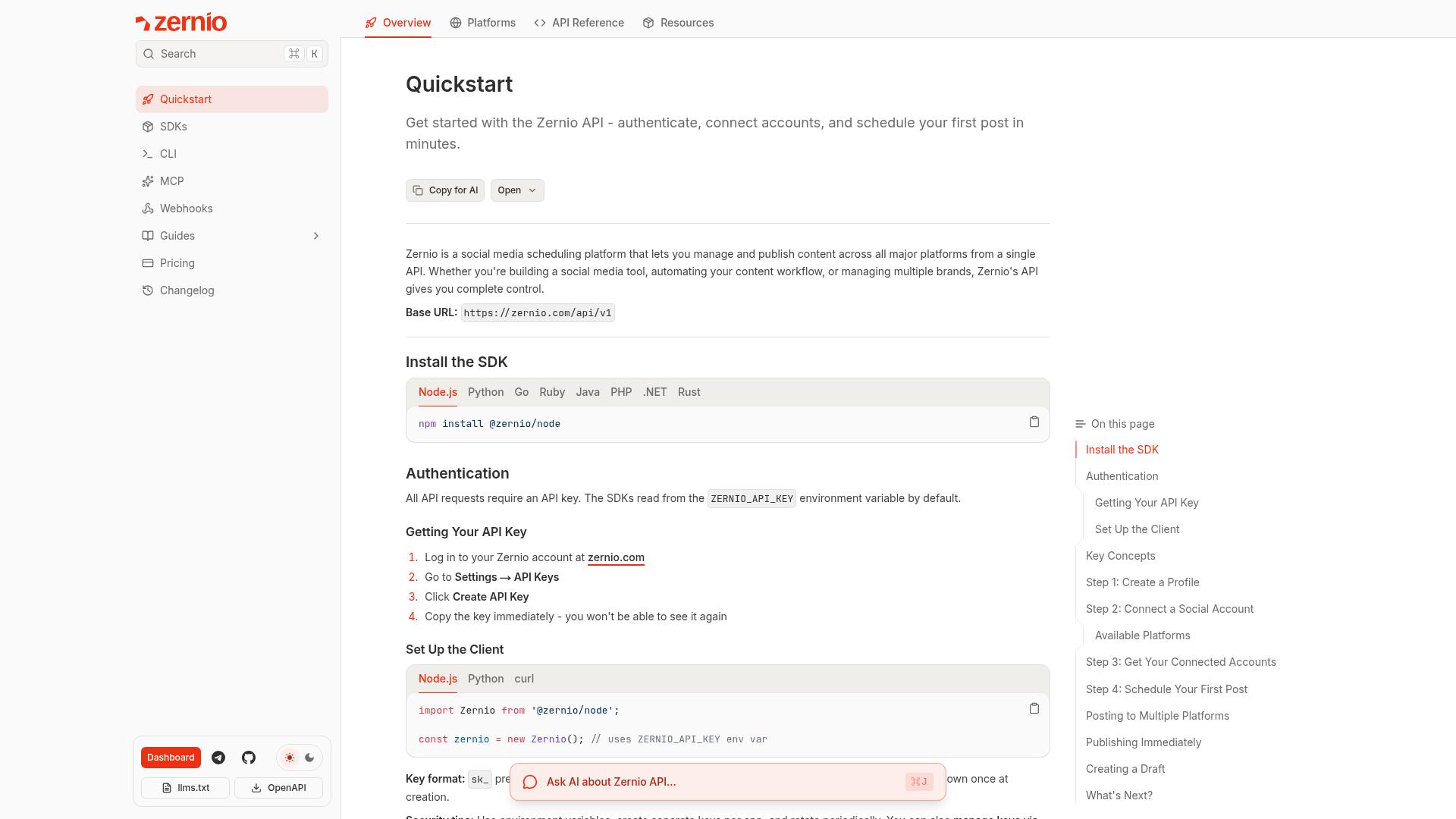
Drop Social Features Into Any App via a Single API. Post, schedule, and manage social interactions across 15+ platforms without building infrastructure from scratch.
Open itThe verdict.
Zernio is built for developers and SaaS teams who need to bolt social media posting, scheduling, and analytics onto their product without wrangling 15 different platform APIs. If you are building an AI agent marketplace, a marketing dashboard, or any collaborative tool that needs a social layer, this is a serious time saver. The free tier with no credit card requirement makes it low-risk to evaluate, though you will want to pressure-test rate limits and edge cases before committing to it as core infrastructure.
Pricing, straight.
Current publicly available tier as of April 2025.
Free
No Credit Card$0 / month
- Post and schedule across 15 platforms
- Retrieve unified analytics
- Connect social accounts easily
- Simple webhook setup
- Programmatic inbox for all platforms
Pricing as captured on 2026-04-15. Check the live site before you commit.
Note: Zernio currently only lists a free tier publicly. Paid plans with higher rate limits and premium support may exist or be forthcoming. Check their docs for the latest.
What it actually does.
Sub-Hour Integration
Zernio claims you can go from zero to live social features in under an hour. The API is RESTful with clear endpoint documentation, so the onboarding friction is genuinely low for any developer comfortable with HTTP requests.
15+ Platform Support
One API covers Twitter/X, Instagram, TikTok, LinkedIn, Facebook, YouTube, Threads, Reddit, Pinterest, Bluesky, Telegram, Snapchat, Google Business, Discord, and WhatsApp. That is a remarkably wide net.
No Developer Apps Required
You do not need to register individual developer apps on each platform. Zernio handles the OAuth flows and token management, which eliminates one of the most tedious parts of social API integration.
Unified Analytics
Pull engagement metrics from all connected platforms through a single analytics endpoint. Useful for dashboards and reporting, though the depth of per-platform metrics is limited compared to native APIs.
Automatic Content Formatting
Submit your content once and Zernio adapts it to each platform's requirements: character limits, image dimensions, video specs. This saves significant time compared to manually tailoring posts for each network.
Programmatic Inbox
A unified inbox endpoint lets you pull messages, comments, and interactions from all connected platforms into your app. Pair this with an AI agent and you have automated community management.
Webhook Support
Set up webhooks to get real-time notifications when events happen across your connected accounts. This is essential for building reactive workflows, especially in AI agent pipelines.
Ad Platform Integrations
Beyond organic posting, Zernio connects to Meta Ads, Google Ads, LinkedIn Ads, TikTok Ads, Pinterest Ads, and X Ads. This makes it viable as the backbone for a full social marketing suite, not just a posting tool.
Who it is for.
SaaS Teams Adding a Social Layer
If your product needs social posting, scheduling, or engagement features and you do not want to spend months building and maintaining integrations with 15 different APIs, Zernio is the obvious shortcut. Think CRM tools, project management apps, or marketing platforms that want to let users publish directly.
AI Agent Builders
Building an AI agent that needs to post content, respond to comments, or monitor social channels? Zernio's API-first design makes it a natural fit as a tool in an agent's toolkit. The webhook support and programmatic inbox are particularly useful for autonomous workflows.
Marketing Teams and Agencies
If you manage multiple client accounts and want to build custom tooling around scheduling and analytics, Zernio gives you the API backbone. The ad platform integrations add extra value for teams running paid campaigns alongside organic content.
Solo Developers Prototyping Fast
Need to validate a product idea that involves social features? The free tier and quick integration time mean you can have a working prototype with real social posting in an afternoon. No credit card, no complex OAuth setup on your end.
The honest part.
-
Shallow Analytics
The unified analytics are convenient but lack the depth of native platform APIs. If you need granular metrics like Instagram Reels play counts, TikTok audience demographics, or YouTube retention curves, you will likely need to supplement Zernio with direct API calls or another analytics tool.
-
Abstraction Layer Trade-offs
By abstracting away platform-specific APIs, you lose access to niche features. Platform-specific post types, advanced scheduling options, or newer features that platforms roll out may not be immediately available through Zernio. You are at the mercy of their update cycle.
-
Opaque Pricing at Scale
Only a free tier is publicly documented. There is no visible information about rate limits, usage caps, or what paid plans look like. If you are building production infrastructure on top of Zernio, you need clarity on what happens when you outgrow the free tier. Reach out to their team before committing.
-
Vendor Dependency Risk
Routing all your social infrastructure through a single third-party API creates a single point of failure. If Zernio goes down, changes its terms, or shuts down, your social features go with it. Consider building an abstraction layer in your own code so you can swap providers if needed.
-
Early-Stage Maturity
Zernio is a relatively new entrant. The documentation is clean but the ecosystem around it (community, SDKs, third-party tutorials) is still thin. Expect some rough edges and be prepared to work directly with their support team for edge cases.
Add social features to your app.
Free tier, no credit card. Integrate in under an hour.