Version 2026.8.1, the release the project itself calls OpenClaw 2.0, rewrites installation, the web app, memory, skills, model setup, automation, browser and app control, plugins and the security model in one go, and upgrading in place is where people are getting burned: a GitHub discussion already reports exec and file access failing to restore after the update. Treat it as a fresh install, read the security notes before anything else, and rebuild your skills with a hard look at what each one can reach. Do that and you get the broadest open agent stack on the market, 389k GitHub stars deep, for the price of your own hardware and model tokens; skip it and you are running an agent with elevated permissions that reads untrusted web pages and messages, which the Reddit and Register coverage is right to worry about.
The largest release in OpenClaw's history is worth installing, provided you delete the old one first and hand back permissions one skill at a time.
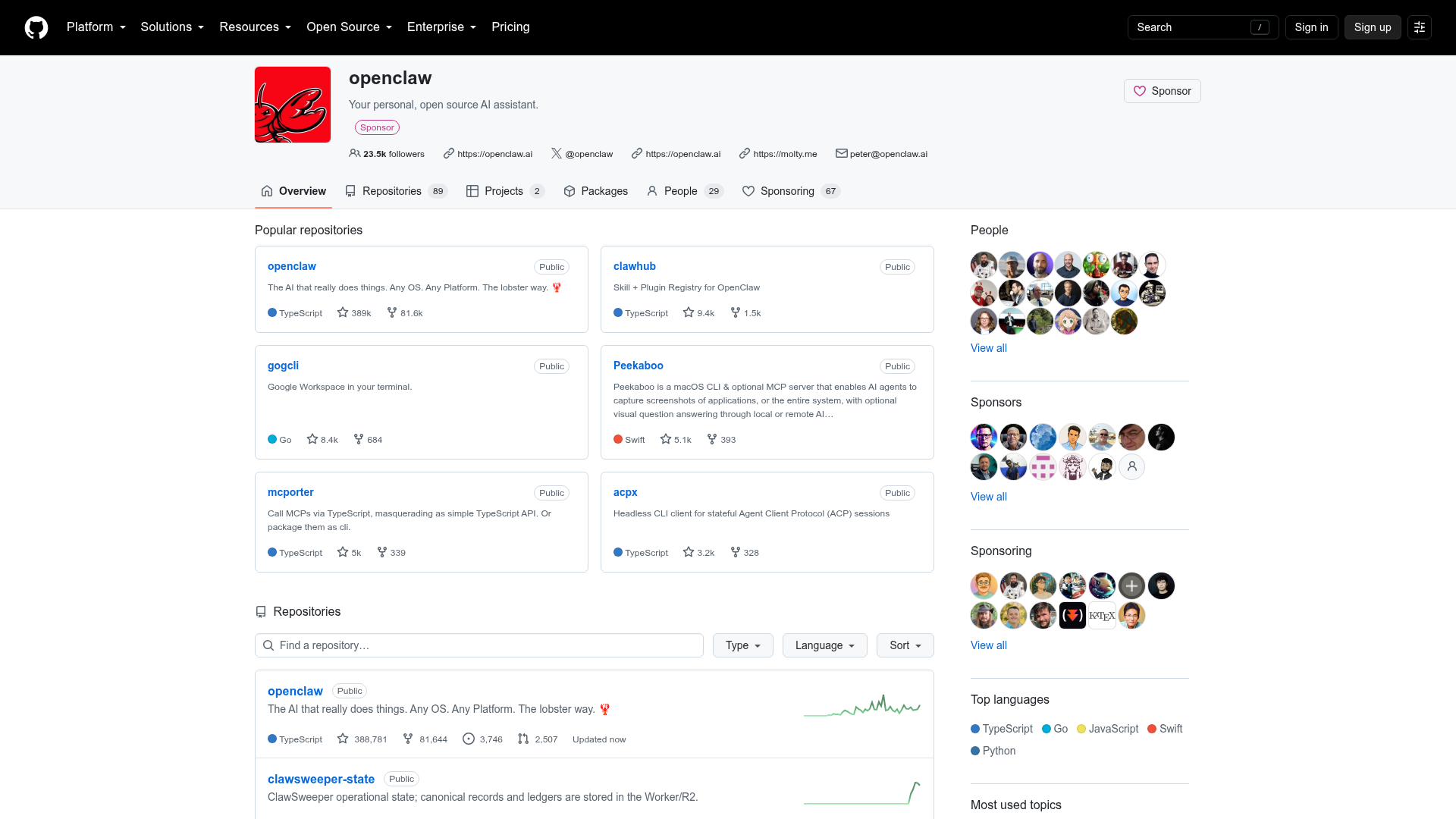
Captured: github.com/OpenClaw, the project's home, not a product screen.
The short version.
4 LINESOpenClaw 2.0 (v2026.8.1) touches every layer of the app, so wipe the old install and start clean instead of patching over it.
The new guided installer detects Codex, ChatGPT, Claude, Ollama and LM Studio and version-checks the model before saving, which fixes the old setup pain if you let it run from scratch.
Users on GitHub report exec and file permissions not restoring after upgrade; re-enable each skill deliberately and confirm what it can touch in your browser and apps.
Security is the live debate: the agent processes web pages and messages with elevated permissions, and hidden instructions in that content are the attack path critics keep pointing at.
What it actually does.
8 CAPABILITIES- Guided install with model detection
- The 2.0 installer detects Codex, ChatGPT, Claude, Ollama and LM Studio logins and runs a version check before saving your chosen model.
- Rebuilt web and control UI
- The browser app was rebuilt for 2.0 with a control UI startup reported at 575 milliseconds.
- Memory and session continuity
- The release notes headline stronger memory and session continuity so the agent picks up where it left off across runs.
- ClawHub skill and plugin registry
- A dedicated registry repo serves skills and plugins, with reviewers counting more than 17,000 skills available to connect.
- Cron-driven 24/7 automation
- The agent runs scheduled jobs on cron so workflows keep executing without you at the keyboard.
- Browser and native app control
- Companion tools like Peekaboo capture screenshots of apps or the whole macOS screen so the agent can see and act on what is running.
- One trust boundary per gateway
- The 2.0 security pass moves to a single trust boundary per gateway, which is the change to read before you re-enable anything.
- MCP and ACP tooling
- mcporter calls MCP servers as plain TypeScript or packaged CLIs and acpx runs headless stateful Agent Client Protocol sessions.
How you would actually use it.
4 PLAYS- One-person business autopilot
- Self-host OpenClaw, wire a handful of skills to your business tools, and schedule them on cron so lead follow-ups, reporting and housekeeping run overnight.WHOSolo founder or indie operatorPAYOFFA reviewer who tested this for six weeks describes workflows that manage themselves 24/7 without hiring.
- Google Workspace from the terminal
- Pair OpenClaw with the gogcli companion so mail, calendar and docs are reachable as commands the agent can chain.WHODeveloper who lives in a shellPAYOFFInbox and calendar triage without leaving the terminal, with the agent doing the repetitive clicks.
- Local-model agent on your own box
- Run the guided installer, point model detection at Ollama or LM Studio, and keep tokens and memory on your machine.WHOPrivacy-minded tinkererPAYOFFA capable desktop agent with no per-seat subscription and no cloud model bill.
- The clean-room migration
- Export a list of your skills, uninstall completely, install 2.0 fresh, then add skills back one at a time while checking exec, file, browser and app reach for each.WHOExisting OpenClaw user on a pre-2.0 configPAYOFFYou avoid the broken-permissions state others hit after upgrading and end up knowing exactly what your agent can touch.
Pricing, straight.
3 TIERS- Verdict on the price
- The real cost is not a subscription but your model tokens and the hours you spend on a proper reinstall and permission audit, and for a stack this broad that is a fair trade; treat the $10 Pro figure as unverified until a pricing page exists.
What people online are saying.
5 QUOTEDReaction is loud but shallow so far: launch buzz on Hacker News and Product Hunt about the easier install and rebuilt browser app, running straight into pointed security criticism from Reddit and The Register and reports of broken permissions after upgrading.
This is the largest update in OpenClaw's history, simplifying installation and rebuilding the browser app.
PraiseSecurity is worse than expected: messages and web pages the agent processes can carry hidden instructions, and it handles that content with elevated permissions.
CritiqueAfter the update the tool permissions did not fully restore; exec and file access had to be re-enabled from the config or by restarting the environment.
MixedAfter six weeks of testing, it is a self-hosted agent that runs on cron, connects to over 17,000 skills and manages workflows around the clock.
PraiseThe honest part.
5 LIMITATIONSThe agent processes web pages and messages with elevated permissions, so hidden instructions in untrusted content are a real attack path, and even the 2.0 security pass draws a dumpster-fire verdict from The Register.
Upgrading in place has broken tool permissions for some users, with exec and file access failing to restore, which is why a clean reinstall is the recommended route.
Initial setup is complex and users say the security-hardened install is more complicated than before, despite the new guided installer.
Offline capability is limited; most useful model paths still route through hosted providers unless you run Ollama or LM Studio locally.
The main repo carries 3,746 open issues and 2,507 open pull requests, so expect rough edges and a fast-moving target rather than a polished product.
The field.
3 ALTERNATIVES- Claude Code
- Anthropic's terminal-based coding agent focused on repositories rather than the whole desktop.PICK IT WHENYour job is shipping code and you want a narrower, vendor-supported agent instead of a self-hosted platform that also drives your browser and apps.
- OpenAI Codex
- OpenAI's model-driven agent workflows for developer tasks.PICK IT WHENYou want managed task automation tied to OpenAI's stack and do not need open-source, multi-surface control of native apps.
- Open Interpreter
- A local, open agent that executes code and acts on your machine.PICK IT WHENYou want the simplest possible local agent and can live without OpenClaw's messaging, plugin registry and multi-platform reach.
Getting started.
3 STEPSRead the v2026.8.1 release notes and security changes, note the skills and plugins you rely on, then uninstall the old version completely rather than patching it.
Run the guided installer, let model detection find your Codex, ChatGPT, Claude, Ollama or LM Studio setup, and confirm the version check passes before saving.
Re-add skills one at a time, checking what each can reach in exec, files, browser and native apps, and schedule cron automations only after each skill is verified.
Quick answers.
4 ANSWERS- Can I just upgrade my existing OpenClaw install to 2.0?
- You can, but you probably should not. The release touches installation, messaging, memory, skills, model support, automation, browser and app control, plugins and security, and a GitHub discussion already reports exec and file permissions failing to restore after upgrading. A fresh install with skills re-enabled one at a time is the safer path.
- Is OpenClaw safe to run on my main machine?
- Critics on Reddit and at The Register argue no, because the agent handles web pages and messages with elevated permissions and content can contain hidden instructions, and it has a write tool that can create files in its own workspace. Version 2.0 moves to one trust boundary per gateway, which helps, but you still need to audit what each skill can reach and keep the blast radius small.
- Which models does it work with?
- The 2.0 guided installer detects Codex, ChatGPT, Claude, Ollama and LM Studio and runs a version check before saving your choice. That means both hosted providers and local models are first-class, so a privacy-first local setup is a real option.
- What does it actually cost?
- The core is open source on GitHub and self-hosted, so the direct cost is your hardware and model tokens. Structured listing data shows a Pro tier at $10 a month and a custom Enterprise plan, but no public pricing page was found to confirm those, so treat them as unverified.
The bottom line.
SPECIMEN 0212 CLOSEDRebuild from zero, audit every skill's reach, and OpenClaw 2.0 is the most capable free agent runtime a builder can own right now. Upgrade in place and you inherit both the old permission sprawl and the new breakage.
Field research: 1 page scraped · 3 search passes · 24 community sources. Reviewed by the Koda desk on 2026-09-04.