- SPECIMEN
Iris.ai Researcher Workspace
- FILED AS
AI tool suite that filters, analyzes and summarizes a corpus of research documents
- INTAKE DATE
- 2026-09-06
- CLASS
- Productivity
- METHOD
- 1 page scraped, 3 search passes, 24 community sources
Koda Score = weighted blend: capability 35, ease 20, value 25, momentum 20.
Capability is solid for corpus filtering, extraction and summarization but it is not a citation-tracing leader; ease drops because you must assemble and upload a dataset before anything useful happens; value is fair at a free tier and a $29 Pro plan listed on the site; momentum is dragged down by very sparse public discussion despite a 1.6.0 release and steady blog updates.
7 MIN READThe design decision that matters here is corpus-first: you load a bounded set of documents, from EndNote, BibTeX, CSV or full text, and the modules work across that set rather than answering one question at a time. That makes it a triage layer for literature reviews and technical due diligence, and in our run it earned trust only after we checked its summaries against two papers we already knew cold. Adopt it if you regularly face 30 to 200 documents on one topic; skip it if your research need is a quick answer.
It refuses to be a chatbot: you hand it a pile of papers and it tells you which ones deserve your afternoon.
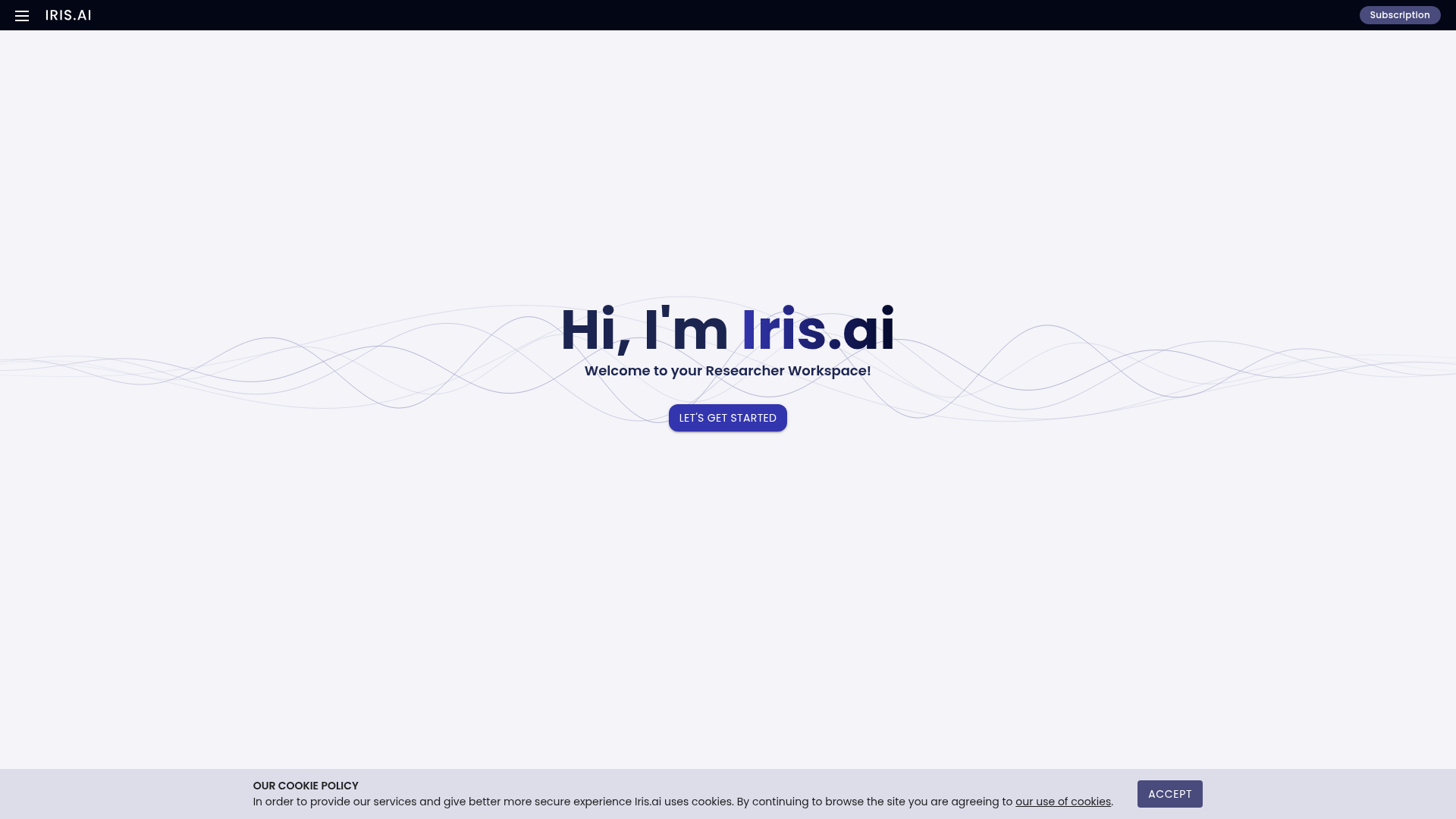
Captured: rspace.iris.ai on 2026-09-06.
The short version.
4 LINESLoad a bounded corpus of 30 to 50 papers on one topic before you judge it; it is built to analyze a set, not to answer a search-bar question.
The analyze tool lets you pick concepts for inclusion and exclusion, so you can prune a PubMed date-filtered dataset without reading every abstract.
Validate its summaries against two documents you know well; treat everything else as a ranked reading list, not a finding.
Site data lists a free Basic tier and a $29 per month Pro tier, but no public pricing page was scraped, so confirm inside the Subscription panel before budgeting.
What it actually does.
7 CAPABILITIES- Corpus upload in citation or full-text form
- Import document collections as EndNote, BibTeX or CSV, or as full-text files, and work on the whole set at once.
- PubMed dataset builder
- Create a dataset directly from PubMed and apply a Published date filter before analysis.
- Concept-based analyze tool
- Choose concepts for inclusion and exclusion to shrink a corpus to the documents that actually match your problem.
- Contextual, not keyword, discovery
- The help center describes the workspace as understanding your problem contextually and going beyond traditional keyword searching.
- Content-based explorative search
- A module for exploring related literature by content, listed among the five modules in the suite.
- Extraction and summarization across documents
- G2 summaries describe it navigating, reviewing, filtering, extracting and summarizing research documents, including patents and internal files.
- Training resources and worked examples
- The RSpace help center walks through literature review scenarios step by step, which shortens the learning curve.
How you would actually use it.
4 PLAYS- The bounded literature review
- Export 30 to 50 citations on one topic from your reference manager as BibTeX or CSV, upload them, then run the analyze tool with your inclusion and exclusion concepts.WHOGraduate student or postdocPAYOFFA ranked shortlist of papers to read in full, with the rest defensibly set aside.
- PubMed sweep with a date fence
- Build a PubMed dataset inside the workspace, apply the Published date filter to the last few years, and prune by concept rather than by scanning abstracts.WHOBiomedical researcherPAYOFFRecent-literature coverage without hours of manual abstract triage.
- Technical due diligence on a patent and paper pile
- Load the target's patents, key papers and any internal documents you have clearance for, then use extraction and summarization to map claims and gaps.WHOR&D analyst or technical investorPAYOFFA first-pass technical picture you can then verify with a full read of the handful that matter.
- The two-paper sanity check
- Seed the corpus with two papers you know intimately, and compare the workspace's summaries and concept tags against your own understanding before trusting the rest.WHOAnyone new to the toolPAYOFFCalibrated trust, or an early exit before you pay for Pro.
Pricing, straight.
3 TIERS- Verdict on the price
- Twenty-nine dollars a month is reasonable if it saves you one afternoon of abstract triage per month, but with no public pricing page scraped you should confirm the numbers in the workspace's Subscription panel first.
What people online are saying.
2 QUOTEDPublic reaction is very thin: no substantive Reddit, Hacker News or Product Hunt discussion surfaced, and the only user-authored opinion found is a single strongly positive G2 review.
User-friendly for navigating, reviewing, filtering, extracting and summarizing large sets of papers, patents and internal documents, with real time savings.
PraiseThe honest part.
5 LIMITATIONSNothing useful happens until you have assembled and uploaded a corpus, so the first-run friction is real.
The free tier is described on the site as feature-limited, and several capabilities sit behind paid plans.
Public community feedback is nearly nonexistent, so you are relying on vendor documentation and one G2 review rather than crowd-tested reports.
Summaries are a triage signal, not a finding; the digest's own advice is to verify against known sources before trusting output on unfamiliar papers.
It requires an internet connection and the pricing was not confirmable from a public page during this review.
The field.
3 ALTERNATIVES- Elicit
- Research assistant oriented around answering literature questions and paper discovery.PICK IT WHENYou want to pose a research question and get a structured answer rather than manage a document set.
- Consensus
- Search engine that finds and summarizes evidence from published papers.PICK IT WHENYou need quick evidence summaries and are not running an iterative review on a bounded corpus.
- Scite
- Citation-context tool that shows how papers support or contradict each other.PICK IT WHENEvidence tracing and citation context matter more than corpus filtering and summarization.
Getting started.
3 STEPSSign up at rspace.iris.ai and accept the workspace's getting-started flow.
Export 30 to 50 citations on one topic from your reference manager as BibTeX, EndNote or CSV, or gather full-text PDFs, and upload them; alternatively build a PubMed dataset with a date filter.
Run the analyze tool with inclusion and exclusion concepts, then compare its summaries of two papers you know well before reading the shortlist.
Quick answers.
4 ANSWERS- Is this a research chatbot I can ask questions?
- Not primarily. The workspace is a suite of modules that operate on a document set you load, covering explorative search, filtering by concept, extraction and summarization. The help center says it understands your problem contextually rather than by keywords, but the unit of work is a corpus, not a single query.
- How do I get my existing references in?
- The training resources describe uploading collections in citation formats such as EndNote, BibTeX or CSV, as well as full-text documents. You can also create a dataset straight from PubMed and apply a Published date filter.
- What does it cost?
- Structured site data lists a free Basic tier, a Pro tier at $29 per month, and an Enterprise tier on request. No separate public pricing page was found during this review, so confirm the current numbers in the workspace's Subscription panel before you commit.
- Can I trust its summaries for a systematic review?
- Treat them as triage, not evidence. The sensible pattern is to seed your corpus with papers you already know well, check the workspace's summaries and concept tagging against your own reading, and only then lean on it to rank the rest for a full read.
The bottom line.
SPECIMEN 0214 CLOSEDWorth a free-tier trial on a real review project this week, with the paid tier only after it correctly triages a set you can already grade.
Field research: 1 page scraped · 3 search passes · 24 community sources. Reviewed by the Koda desk on 2026-09-06.