- SPECIMEN
Labelf
- FILED AS
Custom AI classification and analytics for customer interactions
- INTAKE DATE
- 2026-09-24
- CLASS
- Analytics
- METHOD
- 2 pages scraped, 3 search passes, 24 community sources
Koda Score = weighted blend: capability 35, ease 20, value 25, momentum 20.
These are source-based, not hands-on scores: capability credits the listed classification and analytics breadth; ease reflects demo-led access and reported setup effort; value remains provisional without prices; momentum reflects a Telia testimonial and Zendesk listing but thin public discussion and no supplied shipping history.
7 MIN READCustom classification plus on-premise deployment earns Labelf a serious pilot, not an automatic rollout. Customer-operations and QA leads should shortlist it for issue detection, root-cause analysis and tailored coaching. Hold the purchase until you can validate its findings on real interactions and price the deployment.
The digest sells a text classifier; the current site sells a customer-operations analyst that can run inside your own infrastructure.
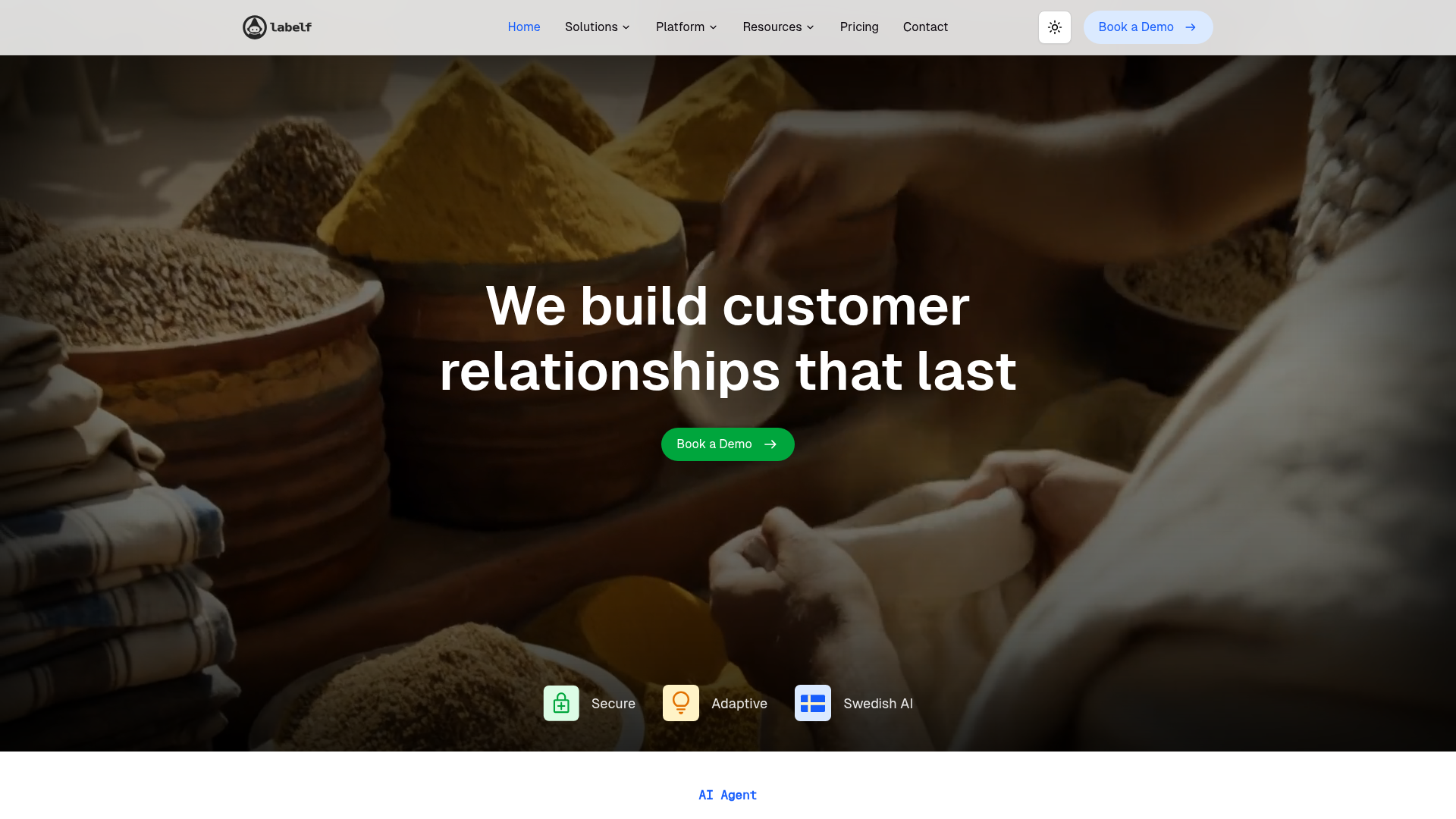
Captured: labelf.ai on 2026-09-24.
The short version.
4 LINESEvaluate the current customer-interaction analytics suite, not just the active-learning classifier described in the digest.
Test custom classification, issue detection and plain-language analysis on a representative sample of your own interactions.
Confirm connectors separately from hosting: Zendesk has a marketplace app, while AWS, Azure and Google Cloud are listed as deployment environments.
Request a written quote and onboarding scope because neither public prices nor a reliable setup timeline appears in the supplied material.
What it actually does.
7 CAPABILITIES- Business-specific classification
- The pricing page lists custom interaction-classification models, hierarchical categories and adaptation to your business terminology in both suites.
- Plain-language analyst
- The homepage presents an agent that answers questions about customer interactions, including churn, satisfaction and unnecessary handling time.
- Issue and root-cause analysis
- Both suites list issue-spike detection, root-cause analysis, AI-powered reporting and customizable real-time dashboards.
- Summaries and sentiment
- Custom prompting, interaction summaries and sentiment analysis are listed in both Business and Enterprise.
- Multiple channels and languages
- The pricing table lists tickets, chats, emails, surveys, voice calls and transcription, alongside support for more than 100 interaction languages.
- Tailored coaching
- Labelf positions its interaction insights as a way to identify individual coaching opportunities and turn best practices into standard practice.
- Flexible deployment
- The supplied materials list on-premise operation, private deployment on AWS, Azure or Google Cloud, and a managed EU cloud option.
How you would actually use it.
3 PLAYS- Explain an issue spike
- In a pilot, define a classification hierarchy around recurring contact reasons and apply it to a representative set of support interactions. Use the listed spike-detection and root-cause features to investigate a rising issue, then check the explanation against the underlying records.WHOSupport operations analystPAYOFFA prioritized issue to investigate, with a way to test whether the diagnosis holds up.
- Turn handling-time analysis into coaching
- Ask where agents spend unnecessary time and which contact patterns involve avoidable transfers. Review the findings with team leads and use confirmed patterns to design individual coaching.WHOContact-center QA leadPAYOFFSpecific coaching targets rather than a blanket instruction to make calls shorter.
- Build a business-specific satisfaction taxonomy
- Use hierarchical classification to organize surveys and support interactions around your own products, policies and customer pain points. Combine sentiment analysis with plain-language questions to investigate which issues accompany poor satisfaction.WHOCX insights managerPAYOFFAn investigation structured around your business terminology rather than sentiment alone.
Pricing, straight.
NO TIERS PUBLISHED- Verdict on the price
- Fair value cannot be established without a quote; request a total cost for your interaction volume, deployment choice and transcription requirements.
What people online are saying.
3 QUOTEDPublic feedback is sparse: review snippets praise ease and the team, while an eesel.ai article flags upfront setup effort, leaving too little evidence for a reliable consensus on the current suite.
Getting started requires a substantial upfront investment of time.
CritiqueThe honest part.
5 LIMITATIONSNo public prices, usage allowances or volume-based cost details are supplied, so output per dollar cannot be calculated.
A Zendesk marketplace app is documented, but broader helpdesk and CRM connector coverage is not established; cloud hosting options are not equivalent to workflow integrations.
The digest and Product Hunt listing describe active learning, but the supplied current pages do not document its workflow, labeling requirements or training controls.
The homepage's percentage improvements lack supporting methodology in the supplied material and should not be treated as expected results.
No reliable onboarding duration or independent accuracy benchmark is provided, and the small public-review footprint does not establish performance of the current analyst offering.
The field.
2 ALTERNATIVES- Lang.ai
- A no-code text-automation alternative for support and customer-experience workflows.PICK IT WHENYour evaluation centers on support text automation; compare it directly, since the supplied research does not establish a pricing or performance advantage.
- Klassifier
- A comparable text-analysis product with similarly limited public-review evidence in the supplied comparison.PICK IT WHENYou want another text-analysis candidate in the pilot, not a substitute with a demonstrably stronger public-review record.
Getting started.
3 STEPSBook a demo and discuss Business versus Enterprise, including your deployment and integration requirements.
Confirm the data connection and agree on a pilot using representative tickets, chats, emails, surveys or calls.
Define your classification hierarchy, investigate one operational question and check the findings against the source interactions.
Quick answers.
4 ANSWERS- Is this still the active-learning NLP tool described in the digest?
- The digest and Product Hunt listing describe low-code text classification with active learning. The current homepage and pricing materials emphasize customer-interaction analytics, a plain-language analyst and custom classification models. The supplied current pages do not establish how the active-learning workflow operates today.
- Will it connect to our existing support stack?
- The research includes a Zendesk Marketplace listing for AI Ticket Tagger by Labelf. The pricing page lists supported interaction types, but that does not prove native connectors for every system that produces them. Ask for a connector-specific demonstration and the scope included in your quote.
- Can customer data stay inside our infrastructure?
- Labelf says its on-premise option runs entirely within your infrastructure, and its private-cloud option supports AWS, Azure and Google Cloud. The structured site data also describes a managed EU cloud option as GDPR-compliant. Confirm the actual data flows and contractual controls for your chosen deployment.
- What is the difference between Business and Enterprise?
- Business is positioned for medium-sized customer-interaction operations seeking quick cloud deployment; Enterprise emphasizes deployment and integration flexibility for larger organizations with sophisticated needs. Both list custom classification and the core analytics features, but neither publishes a price in the supplied page.
The bottom line.
SPECIMEN 0231 CLOSEDBring a business-specific classification hierarchy and one costly contact pattern to the demo. Make Labelf show the path from interaction to diagnosis to coaching action before buying the broader promise.
Field research: 2 pages scraped · 3 search passes · 24 community sources. Reviewed by the Koda desk on 2026-09-24.