- SPECIMEN
OpenAI API
- FILED AS
OpenAI's API platform, now with discounted cached input for agent workloads
- INTAKE DATE
- 2026-10-04
- CLASS
- AI Platform
- METHOD
- 1 page scraped, 3 search passes, 12 community sources
Product Hunt developers describe dependable tool calling and structured outputs, which covers the core of what agent builders ask of a model API. THE RUNDOWN
Reviewers praise straightforward integration and good docs, though capturing the discount means reworking request order in every agent you run. producthunt.com
Not scored: no price is published, so the Koda Score is weighted over capability, ease and momentum. THE DAMAGE
Capped at 6.0: the homepage announces GPT-6.1 Sol and a DevDay recap, yet no dated traction figure from OpenAI's own record was available. THE STREET
Koda Score = weighted blend of the scored dimensions: capability 35, ease 20, momentum 20, out of 75. Value is not scored because no price is published, so it carries no weight.
Roughly 90% off cached input reads makes OpenAI's API a real cost lever for long-running agents, provided each request opens with a large, stable section. The catch is that savings only appear on the invoice, and community posts argue the headline input price hides the real blend. High-volume agent teams should restructure now; teams sending one-off prompts will see little change.
OpenAI now discounts the tokens your agent resends on every call, which turns prompt order into a line item on your bill.
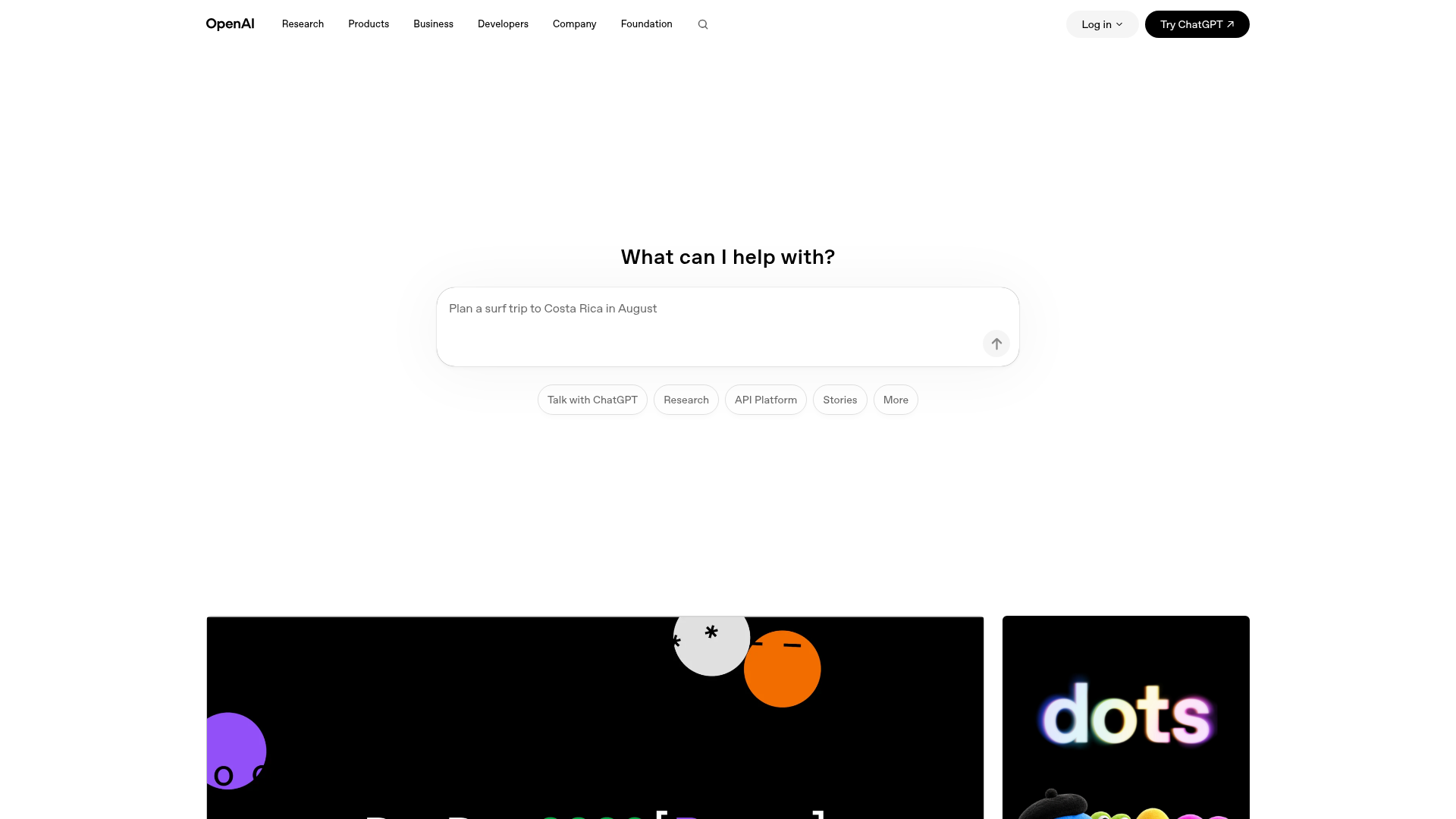
Captured: openai.com on 2026-10-04.
Read this first.
3 LINESReorder agent requests so content that never changes comes first, since that opening section is what the cache discounts.
Start with your longest-running agent, because it resends the most context per task.
If OpenAI's caching math disappoints, Claude and Gemini are the comparison set community reviewers name.
What it can do.
5 CAPABILITIES- Cached input reads
- Bills input tokens repeated from earlier requests at a steep discount, aimed at agents that resend the same context.
- Tool calling
- Lets models call the tools you define inside a workflow, a strength Product Hunt developers single out.
- Structured outputs
- Returns responses in a fixed structure that downstream code can parse.
- Long-context tasks
- Handles long documents in one request, useful when reference material sits in the cached opening section.
- Multilingual support
- Works across many languages, as the homepage prompts in Japanese and German show.
Ways to run it.
3 PLAYS- Before-and-after cost test
- Log cost per completed task for one agent for a week, move its unchanging instructions to the top of each request, then log the same metric for another week.WHOAgent platform engineerPAYOFFA savings figure from your own traffic to justify rolling the change out.
- Prefix-first request template
- Build every request in a fixed order: system prompt, then tool definitions, then reference documents, with the per-call user turn last.WHOBackend developer building tool-calling agentsPAYOFFRepeated calls share an identical opening, the part the cache can discount.
- Volume gate
- Approve the refactor only for workflows where the same long context repeats across many calls; leave short one-off prompts as they are.WHOEngineering lead budgeting AI spendPAYOFFEngineering hours go only to agents where cached reads can move the bill.
What it costs.
NO TIERS PUBLISHED- Verdict on the price
- With no per-token rates printed on the OpenAI pages reviewed, the cached-read discount only becomes a savings claim once you check your own bill.
The street's view.
4 QUOTEDBuilders on Product Hunt rate the API as dependable for production work, and cost transparency draws the sharpest complaints, including a forum post on caching math.
Reviewers call the models fast and reliable, with solid APIs and documentation that make getting started simple.
PraiseA reviewer calls OpenAI dependable for reasoning and low-latency production use in daily workflows.
PraiseA developer calls the advertised low input-token price misleading, arguing that cache writes and uncached inputs push effective cost up and that the higher uncached price should be stated plainly.
CritiqueReviewers flag high or unpredictable costs and answers that come out generic or off target.
CritiqueWhere it breaks.
4 LIMITATIONSCache writes and uncached input carry their own charges, so effective input cost can sit above the headline rate.
Version churn and thin transparency about updates, both reported on Product Hunt, can change agent behaviour without warning.
Rate limits, another recurring Product Hunt complaint, can throttle high-volume agent fleets.
OpenAI lists limited context memory in conversations among its own product limitations.
What else to weigh.
2 ALTERNATIVES- Anthropic Claude
- Anthropic's model family, which one Gartner reviewer calls essential to their daily workflow.PICK IT WHENInstruction-heavy work or complex reasoning carries the workload.
- Google Gemini
- Google's assistant and model family, praised by a Gartner reviewer for making everyday work easier.PICK IT WHENEmail summaries and YouTube analysis drive most of your usage.
First hour.
4 STEPSSign up for API access on the OpenAI API Platform.
Reorder each request so the content that never changes leads.
Send repeat calls so later requests can read that opening from cache.
Check your bill for cached input listed apart from uncached input.
The questions people ask.
3 ANSWERS- Do I have to opt in to get the cached-read discount?
- A developer on the OpenAI Community forum describes the caching as implicit and objects to how it is priced. The savings depend on repeated calls opening with identical content, so request order is the lever you control.
- Is the 50% price cut confirmed?
- OpenAI's API platform lists pricing approximately 50% lower than GPT-5.6 equivalents. Independent pricing write-ups found so far confirm only the cached-input discount, so treat the 50% figure as vendor framing for now.
- Should the recent agent attacks change my rollout?
- OpenAI says its review of the Medicare and Hugging Face agent attacks costs more than US$500,000 per day and is still ongoing, with more organisations possibly being informed. Keep agent permissions narrow while that review continues.
The call.
SPECIMEN 0240 CLOSEDRestructure one agent this week and let the invoice decide whether the rest follow.
Field research: 1 page scraped · 3 search passes · 12 community sources. Reviewed by the Koda desk on 2026-10-04.