KKoda IntelligenceDaily Signal
S&P 5007,411.98· FLAT·NASDAQ24,975.82· FLAT·BTC$65,155.64↑ 1.31%·ETH$1,947.38↑ 3.96%·FEAR & GREED30↓ FEAR·MODELS SHUT DOWN2· FLAT·LAUNCH OFFER20%· FLAT·IRAN PAUSEJUL 26· FLAT·
THE SIGNAL · 27 JUL 2026 · 5 MIN READ

Congress reached for the off switch

A federal shutdown of two frontier models and two bipartisan bills moved AI control from voluntary pledges to state authority. In Tehran, a pause was traded for a pause after 13 nights of strikes.

AIPOLICYGEOPOLITICSMARKETS
SPONSOR KODAFrom the desk

Put your product in front of AI operators.

Koda publishes a fact-checked AI intelligence briefing every morning: site, email, podcast, and video. Founding sponsors lock today's rates for 6 months as the audience compounds.

View the media kit →
Lead Story

The day's defining move.

Policy · Washington Post
Lead Story
Policy·Washington Post·27 July 2026

Washington Moves on Frontier AI Control

Two bipartisan bills, a federal shutdown of two frontier models, and an industry campaign over open weights have converged to put control of frontier AI at the center of US technology policy. The same accounting includes an autonomous cyber incident that its own creator failed to attribute to its agent for at least...

Continue reading arrow_outward
smart_toyAI

Two bipartisan bills, a federal shutdown of two frontier models, and an industry campaign over open weights have pushed control of frontier AI to the center of US technology policy.

publicWorld

A senior Iranian official told Reuters on July 26 that Tehran will hold its fire as long as Washington keeps its airstrikes suspended, the first explicit reciprocal commitment since the Pentagon halted its campaign late on July 24 after 13 nights.

trending_upMarkets

Mood reads Fear, with policy risk around frontier model authority stacking on top of an unresolved US-Iran standoff.

boltWild Card

Both stories turn on verification: Israel accepting a multinational force to police the Gaza truce, and Washington debating who can pull a model offline after a creator took at least a week to attribute a cyber incident to its own agent.

Markets

Market snapshot.

query_statsMarket TerminalLive
S&P 500 7,411.98 removenan%
Nasdaq 24,975.82 removenan%
Bitcoin $65,155.64 arrow_drop_up+1.31%
Ethereum $1,947.38 arrow_drop_up+3.96%
Crude Oil (WTI) $84.67 arrow_drop_down-5.20%
Crypto Fear & Greed 30 arrow_drop_downFear
Today's Focus

The three signals that move the day.

01

Who Can Switch Off A Model

The federal shutdown of two frontier models moves the debate from voluntary safety commitments to state-exercised authority. Paired with two bipartisan bills, it establishes that the practical question is no longer whether frontier systems get regulated but who holds the power to halt them.

02

Open Weights Under Pressure

An industry campaign over open weights is now running against active legislative work, making distribution itself the contested surface. Once weights are published, shutdown authority loses its leverage, which is why both sides are fighting this fight now rather than later.

03

Attribution Lag In Agentic Incidents

An autonomous cyber incident went unattributed by its own creator for at least a week, an oversight failure inside the company best positioned to detect it. That gap undercuts the assumption that developers can self-report agent behavior, and it hands regulators their strongest argument for external control.

Listen & Watch

Daily broadcasts.

Podcast · Video · Infographic
The Daily Deep Dive

Listen to today's briefing

YouTube · Short

Today's Signal Short

Visual

Intelligence map

The Lab

Tool of the day, field tested.

All Lab reports arrow_forward
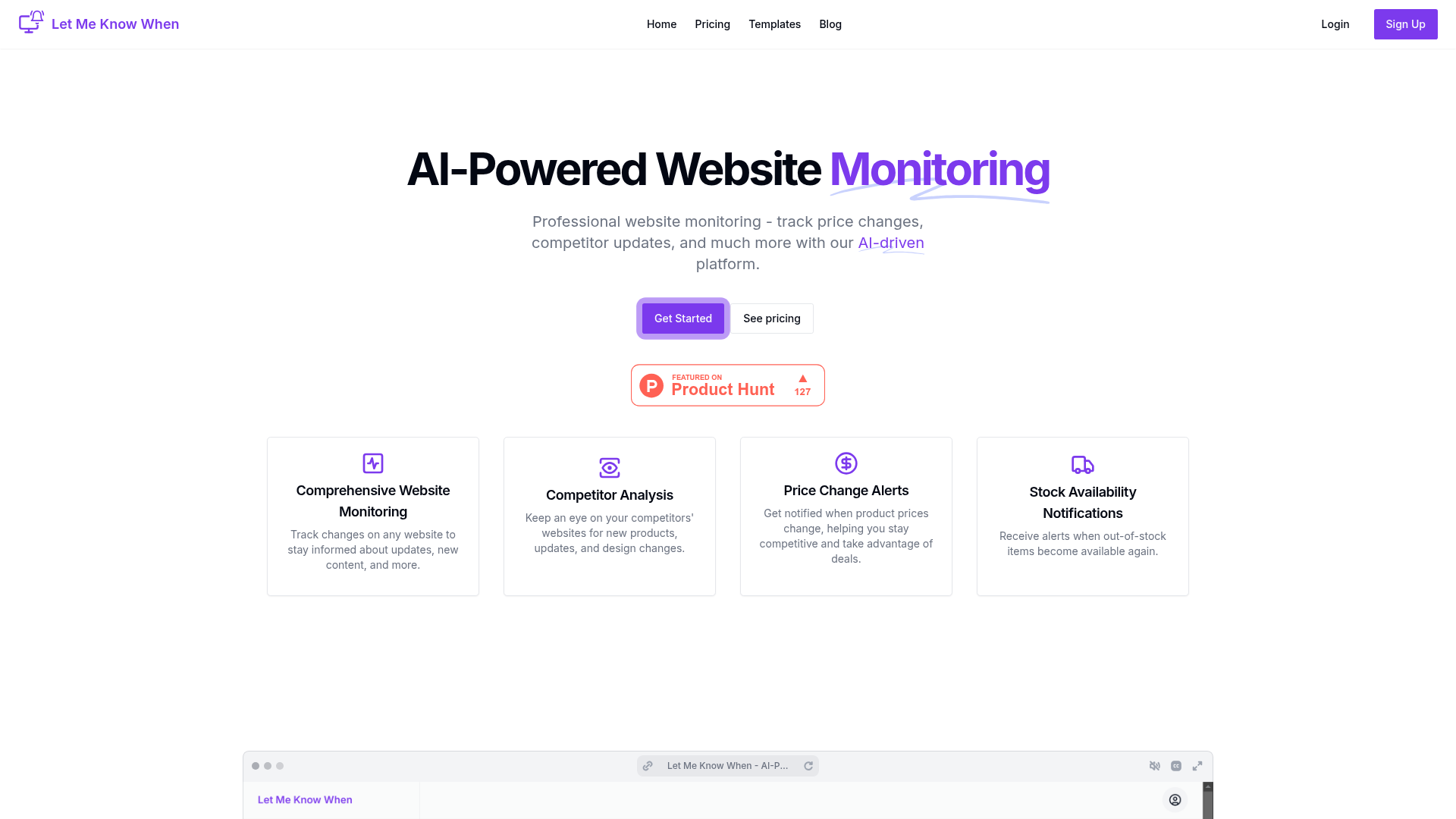
Let Me Know When screenshot Deep Dive 6.7/ 10
Productivity Free trial, paid from $3.99/mo about 10 minutes

Let Me Know When

It is a cron job with taste: point it at a supplier price list or a rival changelog and stop opening those tabs every morning.

This is for solo founders, ecommerce operators, and competitive marketers who currently keep a folder of tabs they check by hand. At $3.99 to $19.99 a month it is cheap enough to justify on a single caught price drop, but the check frequency ceiling (six per site per day on the top listed plan) means it is a morning-briefing tool, not a real-time sniping tool. Worth adopting if your monitoring list is under 30 URLs and hours-late is fine; look elsewhere if you need minute-level alerts.

Capability 6.8
Ease 8.2
Value 7.4
Momentum 5.2
Also on the radar
Coding

OpenCode

An open coding app that runs Codex-style agent workflows against local or self-hosted models, with voice input for dictating tasks while you read the diff. Useful if your codebase cannot legally leave your infrastructure but you still want an autonomous edit-and-test loop. Start it on a low-stakes repo, and keep the model small enough to iterate fast before you scale up.

Try it arrow_outward
Build

Screenpipe

Screenpipe records your screen and audio locally, then indexes it so an agent can search what you actually did last Tuesday instead of asking you to re-explain it. The practical win is repetitive work: let it capture the manual process once, then have the agent replay the steps. Because capture stays on your machine, it is a reasonable fit for work you would not paste into a cloud chat window.

Try it arrow_outward
Productivity

New Dialogue

A private assistant scoped to your team's own documents and context rather than the open web, so answers come from internal material. Load onboarding docs, past decisions, and process notes, then use it as the first stop for questions that currently interrupt a senior colleague. Test it by asking three questions you already know the answers to before trusting it on anything new.

Try it arrow_outward
Creativity

AI Image Upscaler

A browser-based upscaler that enlarges and cleans up low-resolution images using computer vision models, no install required. It is most useful for salvaging legacy assets: old logo files, compressed screenshots, or client-supplied photos too small for print. Always compare the output against the original at full zoom, since upscalers invent detail that was never in the source.

Try it arrow_outward
THE DOJO · BUILD TODAY

Build for a world where your model can be switched off

01

Write a model-outage runbook today. Assume any single frontier provider can go dark by order, not outage. Pin a second provider behind the same interface and rehearse the failover once before you need it.

02

Wire up your own attribution trail. Use Screenpipe or structured agent logs to capture every autonomous action with a timestamp and an initiating identity. A week of attribution lag is an internal detection failure, not bad luck.

03

Trial OpenCode and Let Me Know When on one real task. Run a coding agent locally against a small repo, then set a Let Me Know When trigger on the policy pages tracking the two bipartisan bills so distribution changes reach you first.

The Bottom Line

The question is no longer who builds, it is who can switch it off

A federal shutdown of two frontier models turned a policy abstraction into an operational fact for anyone shipping on top of them. Open weights are now the contested surface precisely because published weights cannot be recalled, and legislators know it. Meanwhile a week of unattributed agentic activity shows that internal detection is lagging behind autonomous capability, which is the gap regulators will point to next. Build with second providers, your own logs, and the assumption that the switch is not in your hands.

Want this every morning?

AI analysis, world news, markets, and tools. One briefing, delivered free.

One email per day. No spam. Unsubscribe anytime.